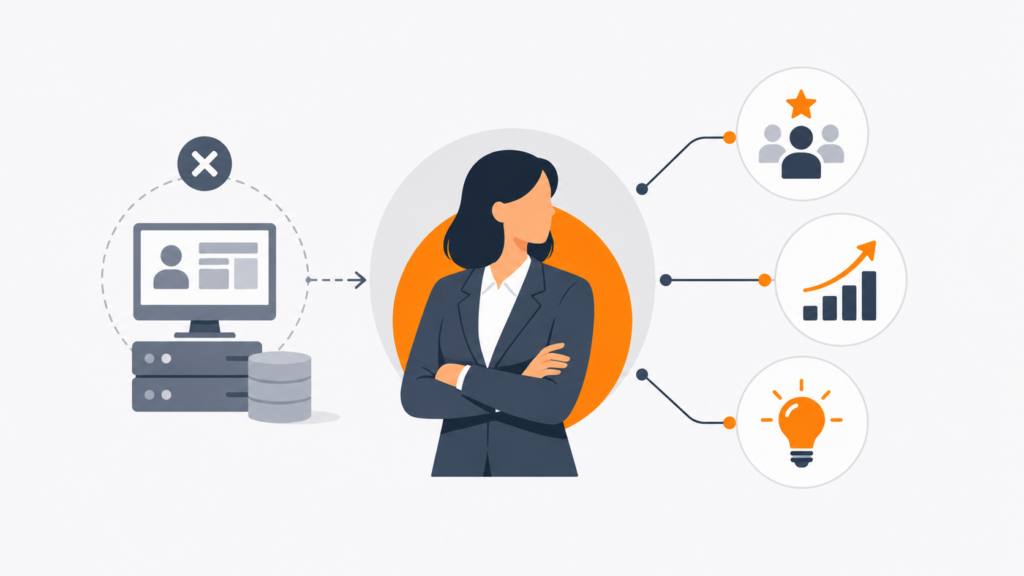
Modern HR and L&D teams sit on a goldmine of information spread across HRIS, ATS, LMS, performance tools, engagement platforms, payroll, and spreadsheets. These disconnected sources create silos that make it hard to answer simple questions like who has which skills, what training worked, and where turnover risk is rising. AI helps by integrating data, reconciling mismatches, and surfacing patterns across systems so leaders can base decisions on a complete and timely picture.
This blog shows how HR and L&D teams can organize their data, understand employee skills, link learning to results, and use AI to make better decisions.
Start With Clean and Connected Data
AI cannot produce useful insights without quality data. The first step is to make sure all workforce data is structured, consistent, and accessible in one place. Begin by identifying all sources of employee information, from HRIS and applicant tracking systems to learning platforms, performance tools, and compensation systems.
Once these systems are connected, AI can perform three key tasks:
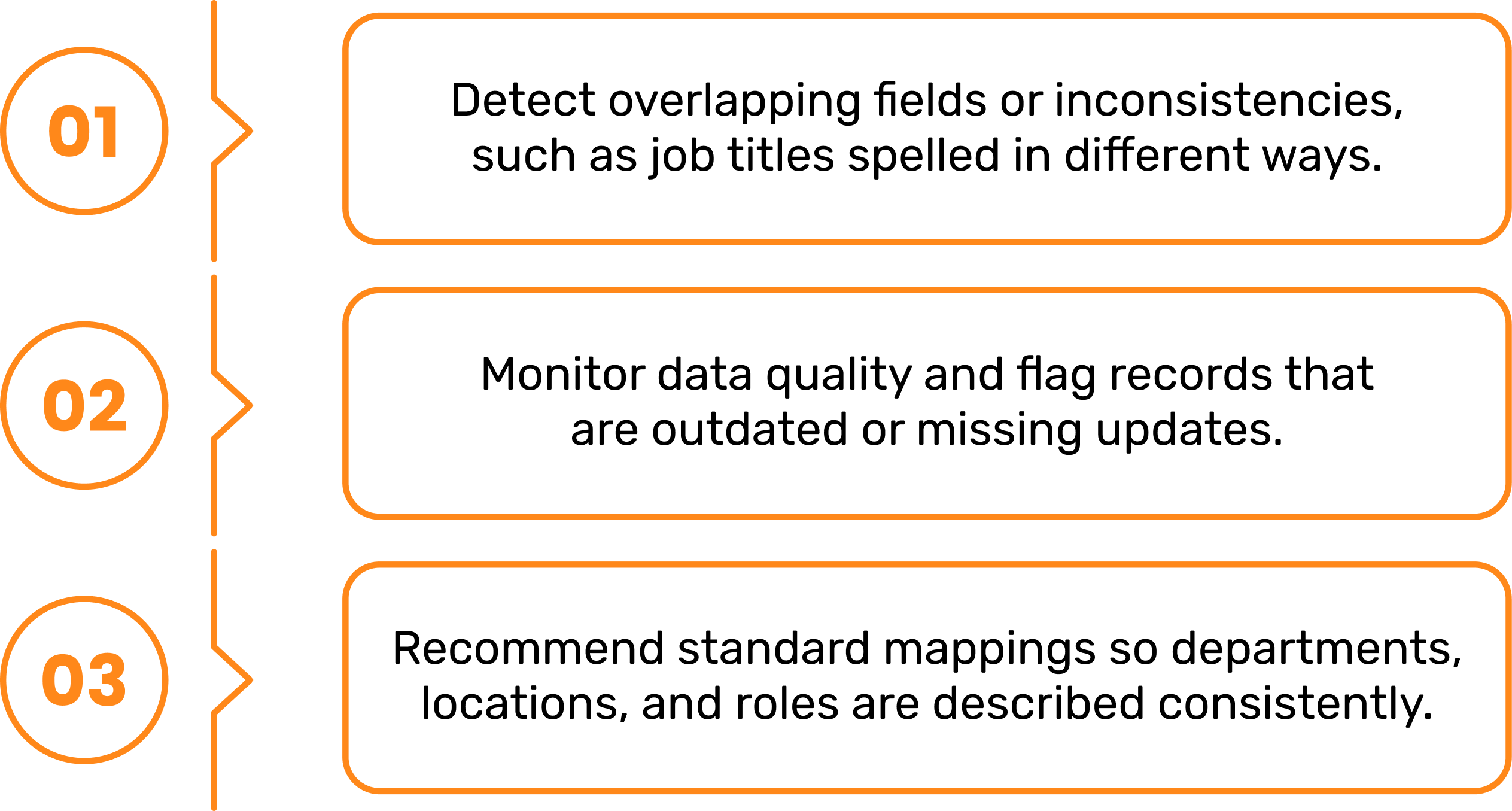
When a unique employee identifier is applied and AI oversees these quality checks, the central data repository becomes reliable. A clean foundation allows the next stage of AI work to focus on uncovering relationships within the data rather than fixing it.
Build a Unified Skills Graph
With clean, centralized data, AI can scan job descriptions, course content, feedback, and project histories to identify skills and group related terms into unified concepts. It can also detect emerging skills as mentions rise across teams.
A unified skills graph breaks functional silos in how skills are recorded and named. It supports better decisions in workforce planning, internal mobility, targeted learning paths, and succession planning because leaders finally see where expertise exists and where gaps are forming. Once the skills part is clear, the focus can shift toward understanding each employee’s complete profile.
Create a Single Source of Truth for Every Employee
Disjointed records make it difficult to understand an employee’s full journey. AI solves this by bringing together job history, certifications, completed courses, project experience, and performance reviews into one continuously updated profile. It can resolve conflicting information, remove duplicate entries, and tag qualitative feedback with related skills or achievements through text analysis.
The result is a single, living record for each employee. Managers can use this to make informed decisions about promotions, training needs, and project assignments. Also, once individual profiles are accurate and up to date, HR and L&D can connect learning efforts directly to tangible outcomes.
Link Learning Inputs to Real Outcomes
AI can connect LMS data with performance, promotion, and retention metrics to show which programs drive results. For example, instead of only reporting that 300 people completed a leadership course, AI can reveal, in a given organization’s data, that participants in that course were promoted about 20% faster than peers in similar roles.
These cause-aware insights let L&D shift resources to programs with proven value and refine curricula to match gaps identified in the skills graph.
Improve Talent Acquisition With Feedback Loops
Recruitment data often stops being useful after a candidate is hired, but AI can keep the connection alive. By linking candidate assessments, interview feedback, and hiring decisions with eventual performance and retention, AI can identify which hiring criteria have historically predicted long-term success.
This feedback loop allows recruiters to adjust evaluation processes based on evidence rather than intuition. Stronger hiring decisions reduce turnover and help ensure new hires are set up for success.
The same predictive approach can be applied to identifying risks and opportunities within the existing workforce.
Forecast Risks and Opportunities Early
AI can combine indicators such as engagement survey results, learning participation, absenteeism patterns, and performance trends to predict rising attrition risk or emerging skill shortages. It can trigger alerts when thresholds are crossed, giving managers time to intervene.
For instance, if AI detects that a high-performing team has a sudden drop in engagement scores alongside reduced training participation, it can flag the situation for review. Early detection allows HR and L&D to respond before the issue grows, which leads directly to ensuring insights are acted on quickly.
Put Insights Into the Flow of Work
Insights are only useful when they appear where decisions happen. Embed AI recommendations within systems managers already use so managers can act without extra steps. For example:
- Performance reviews: During evaluations, managers can receive AI-powered suggestions for targeted development opportunities or potential lateral moves, based on the employee’s goals, recent feedback, and skills profile.
- Learning platforms: When project assignments are linked to a learning platform, AI can recommend relevant courses (e.g., a short Power BI or SQL module) right when the employee is assigned to a new data analysis project.
- Project management tools: While forming teams, AI can highlight employees whose skills and availability align with the project’s needs, helping managers make faster and more accurate assignments.
These in-context recommendations are powered by unified data across HRIS, ATS, LMS, and collaboration tools, which replaces scattered dashboards with timely guidance.
Establish Clear Governance for AI in HR and L&D
Governance builds trust in AI recommendations. Without it, managers may hesitate to act on AI outputs, fearing inaccuracy or bias. A strong governance plan should include:
- Data Lineage Tracking: Document where each data point comes from, how it is transformed, and how it influences AI recommendations.
- Model Performance Reviews: Regularly test AI outputs against real results. For example, check if AI’s high-potential candidate predictions align with actual performance six months later.
- Bias Audits: Use bias-detection tools to ensure recommendations do not unfairly favor certain demographics.
- Access Controls: Limit sensitive insights (like attrition risk scores) to only those who need them for decision-making.
By making governance visible and measurable, HR can reassure leaders and employees that AI is being used responsibly. This trust is critical before moving to wide-scale rollout.
Measure and Communicate Impact
AI adoption accelerates when leadership sees tangible proof of value. To measure this:
- Track Operational Metrics: Reduction in time-to-fill roles, faster promotion cycles, increase in internal hires.
- Track Learning ROI: Compare productivity and retention between employees who completed recommended training and those who did not.
- Track Engagement: Monitor adoption rates of AI recommendations inside performance reviews or LMS platforms.
For example, after embedding AI into leadership development, an organization might find that 70% of participants were promoted within 12 months compared to 40% before implementation.
Communicating these results through executive dashboards, quarterly business reviews, and team meetings builds the case for expanding AI usage.
Roll Out in Phases for Sustainable Change
Introducing AI into HR and L&D works best as a gradual journey, where each step builds on the last and demonstrates value along the way.
- Begin with a Focused Pilot
Choose one priority area, such as leadership succession, where data is already available and the impact will be visible quickly. Unify relevant systems, map skills, and embed AI suggestions directly into talent reviews. - Build on Early Wins
Once the pilot delivers results, extend the same data and insights to a related decision, like linking leadership development programs to retention rates. Use these proven outcomes to strengthen adoption and trust. - Connect the Entire Talent Lifecycle
With solid foundations in place, scale across recruitment, learning, engagement, and mobility using shared employee IDs and consistent models. This ensures insights follow each person’s journey and inform every decision.
End each phase with a quick review of results, lessons learned, and adjustments needed before moving forward. This steady progression keeps momentum high and change manageable.
Avoid Pitfalls That Slow Progress
Even with good AI tools, projects can fail if common issues aren’t handled. To keep AI adoption moving smoothly:

Following these simple steps keeps AI useful, builds trust, and ensures insights actually guide decisions.
Build a Culture of Insight-Driven Action
Technology works when people trust and use it. Tailor learning to roles, recognize teams that apply AI recommendations well, and share success stories. Encourage cross-team data sharing and discourage information hoarding. Over time, connected data and consistent behaviors create a cycle where AI insights guide everyday decisions.