Internal mobility often breaks down in execution. Roles are open, but employees are unsure whether they should apply. Learning happens, but it rarely connects to real opportunities. Managers support development in principle but hesitate when it affects short-term performance. As time passes, talent leaves for growth they couldn’t find internally.
The issue isn’t awareness. It’s the absence of a system that supports movement. Internal candidates remain invisible. Career paths are unclear. Ownership is split across teams, and progress depends on individual effort rather than a structured process.
To move forward, internal mobility needs to be treated as part of workforce planning and organizational design. It should be built into how roles are defined, how development opportunities are provided, and how hiring decisions are made.
This guide walks through how to create that system. It includes practical steps to improve role readiness, manager involvement, learning alignment, and internal hiring. Each section is designed to help HR professionals make internal mobility predictable, supported, and impactful. Let’s get started.
1. Unblock the Invisible Restrictions That Limit Movement
Employees don’t need convincing that internal growth matters. What stops them are structural blockers that no one officially owns. For instance:
- Hiring managers who prefer external candidates because it’s less political.
- Internal job postings that read like external ads and ignore skill adjacencies.
- Lack of cross-functional role clarity, which makes transitions risky for both the employee and the manager.
- Performance management systems that reward retention in teams but not growth across teams.
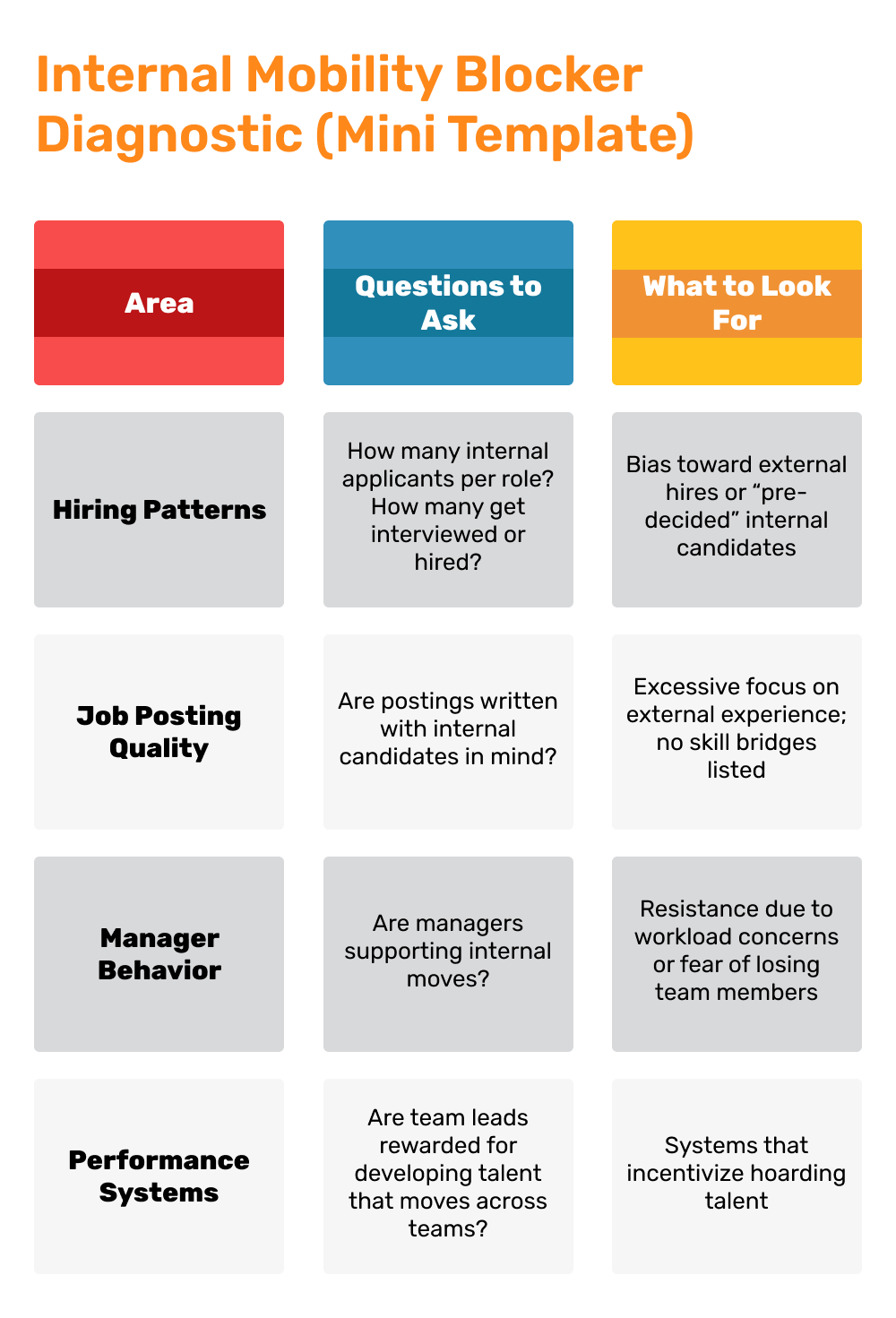
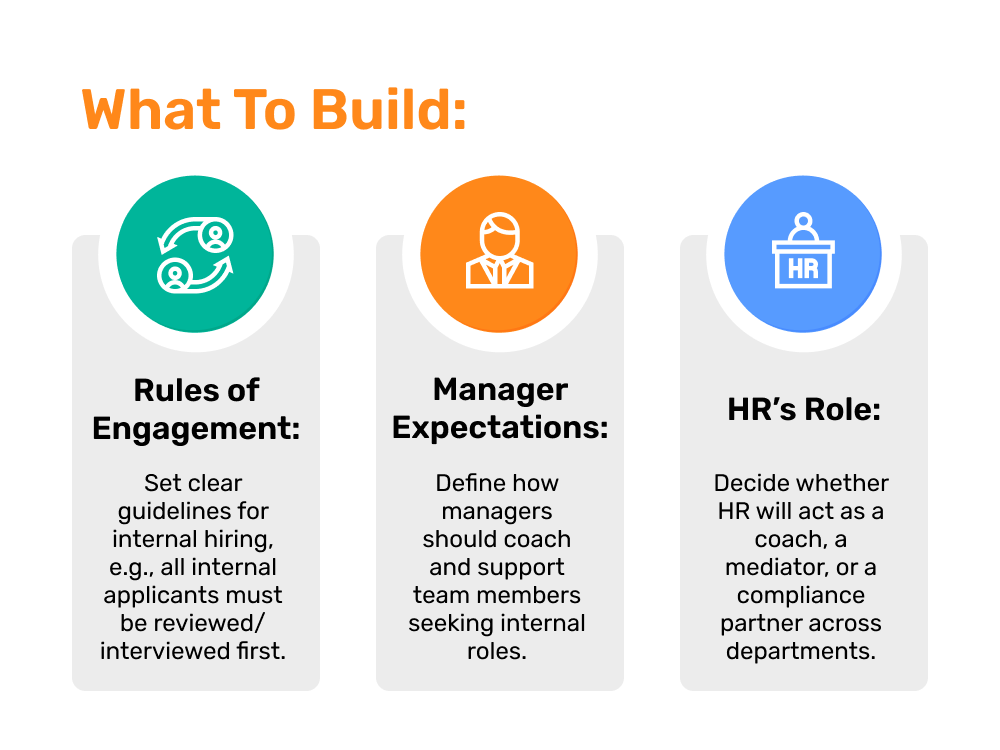
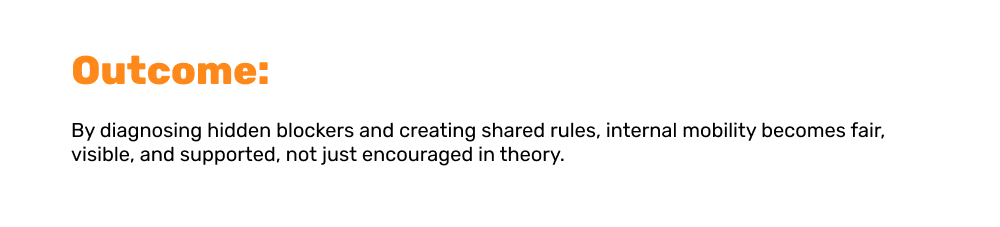
Internal Mobility Blocker Diagnostic Template
Use this simple template to identify and address blockers inside your organization:
2. Make Skills and Readiness Visible Across the Business
You can’t promote internal mobility if business leaders have no visibility into the talent that already exists within their organization. Yet most HR systems only track job titles and completed training, not actual project experience, emerging skills, or career aspirations.
Shift your approach from job posting to talent discovery.
Steps to implement:
- Build internal talent profiles that include completed projects, certifications, skill ratings (validated by managers or peers), and career goals.
- Deploy internal marketplaces or dashboards where hiring managers can search for talent based on specific skills, not just roles.
- In mid-size organizations where AI tools may not be in place, create quarterly internal talent reviews where department heads share who’s ready for movement.
When leaders can see what skills are already in the business, they stop defaulting to external hiring.
3. Design Internal Mobility as a Measurable Process, Not a Campaign
Many HR teams treat internal mobility as a communication initiative, promoting the idea that “growth is encouraged.” But nothing changes if internal moves are not tracked, reported, and followed up with action.
You need real metrics at every level:
- Track internal applications, interview rates, and internal hire percentages by department.
- Monitor which teams are promoting talent versus hoarding it. Share this data with senior leadership.
- Set expectations with managers. For example, at least 20% of open roles must be filled with internal candidates each quarter.
When mobility becomes a tracked metric, it gains the same attention and accountability as retention and engagement.
4. Build Career Paths That Support Horizontal Movement, Not Just Promotions
Career progression is often designed around vertical promotion, but many high-value internal moves are lateral. Moving from operations to customer success, from IT to data analytics, or from finance to product management are all examples of sideways steps that can unlock new value for the organization.
But employees will not pursue lateral moves if they don’t understand what success looks like, how to prepare, or how that move fits into their long-term growth.
Create structured lateral movement guides:
- Identify common transitions between departments.
- Break down the core capabilities needed in each destination role.
- Build targeted, internal learning tracks and stretch assignments that serve as a bridge.
- Give employees a way to demonstrate readiness before applying, such as completing a real project or presenting a business case.
When lateral paths are visible, structured, and supported, they become a reliable mobility engine.
Tip: To support lateral movement, consider training your teams with our course Preparing for Leadership for Non-Managers. It helps employees build leadership skills, manage increased responsibilities, and explore career growth across roles, not just up the ladder.
5. Shift Learning and Development from General Skills to Role-Linked Upskilling
Generic skill development, like broad leadership or communication training, rarely translates into immediate mobility. Employees need specific learning pathways tied to specific roles, not just general competencies.
Refocus your L&D function around role-based capability building:
- Identify high-priority internal roles that are hard to fill externally.
- Work with those department leads to reverse-engineer the actual skills, tools, and project experience needed to succeed in those roles.
- Build short, focused upskilling programs tied directly to those job needs.
- Incorporate internal assessments or manager sign-offs that confirm readiness.
If you run a learning program and cannot point to which internal role it supports, it’s time to revise the strategy.
6. Enable Low-Risk, Short-Term Opportunities to Test New Skills
Some of the best internal moves start with short-term exposure, not full job changes. But most organizations don’t have a formal system for internal gigs, shadowing, or rotational assignments outside early career programs. This is a missed opportunity.
To close this gap and make short-term experiences more intentional, consider the following framework for designing internal gigs and stretch projects.
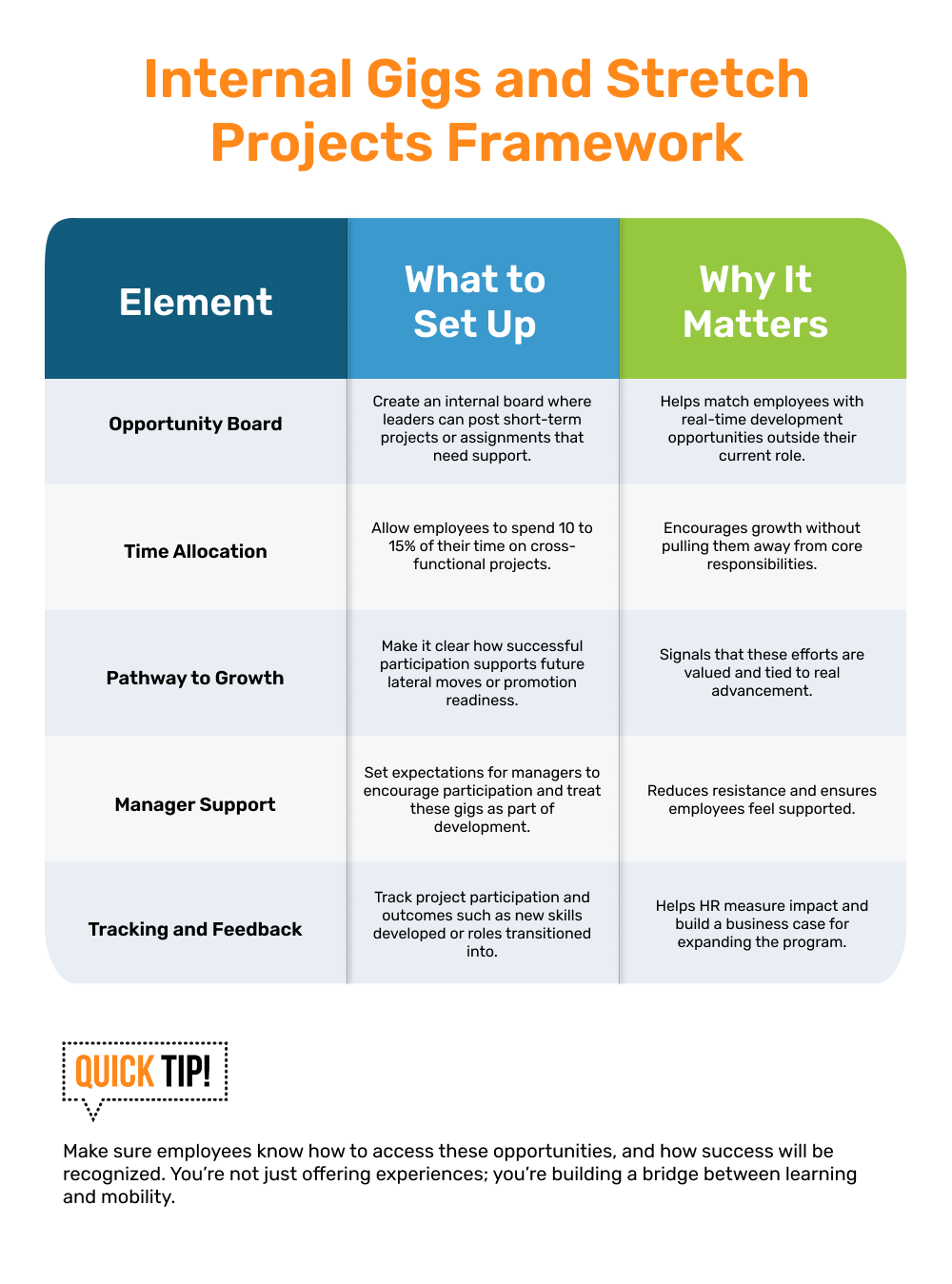
This creates a low-risk way for employees to explore new functions, and it helps managers de-risk hiring decisions by seeing real work before making a move.
7. Fix the Trust Gap Around Internal Applications
Many employees avoid applying internally because they fear judgment, disapproval, or retaliation. If your policies allow internal applications but your culture discourages them, mobility stalls quietly.
Build a culture of psychological safety:
- Allow employees to explore internal roles without having to inform their current manager during early stages.
- Make it clear in manager training that supporting internal movement is part of their role as a leader, not a threat to their team’s performance.
- Offer confidential coaching or internal career advisors to guide employees through the application process.
- Recognize and reward leaders who develop talent that moves across the business.
Without trust, all the processes and tools in the world won’t deliver meaningful results.
Make Internal Mobility a Business Capability, Not a Talent Initiative
Internal mobility only becomes sustainable when it’s seen as normal, expected, and valuable by every part of the organization, not just HR.
That requires data to guide decisions, systems to support movement, manager accountability, and a consistent message: your next opportunity doesn’t have to come from the outside.
Want to build skill-based pathways that directly support internal movement?
KnowledgeCity’s training platform is designed to close the skill gap between where your talent is today and the roles they can grow into tomorrow. Explore how we help HR and L&D professionals support real development for real opportunities.