Many employees try to look confident with AI tools even when they are unsure. They copy prompts, doubt their own results, and stay quiet to avoid being noticed. Pretending takes more energy than learning and slows down real growth.
The solution lies in creating a workplace culture where employees can explore, ask questions, and develop AI skills with guidance and support. In this blog, we explain why employees fake confidence, the importance of psychological safety, and five practical steps HR and L&D teams can take to foster an environment where learning and growth happen openly.
Why Employees Pretend to Understand AI
When employees act like they know how to use AI, it rarely comes from laziness. It comes from fear. They see colleagues who seem confident, managers who expect results, and industry messages that suggest everyone is already an expert. The easiest response is to copy what looks safe, stay quiet when confused, and avoid asking for help.
At the core of this behavior is psychological safety. When employees do not feel comfortable admitting they are still learning, they focus on performing rather than progressing. Teams that fall into this pattern make more mistakes, slow down innovation, and miss opportunities to leverage AI effectively.
HR and L&D leaders need to approach AI training not as a technical skill alone but as an opportunity to reshape how people learn at work. Here’s how you can do it.
Step 1: Set Clear Expectations for AI Use
Unclear guidelines leave employees guessing. Some overuse AI, others avoid it entirely, and many pretend they know what is expected.
HR teams can prevent confusion by helping leaders define:
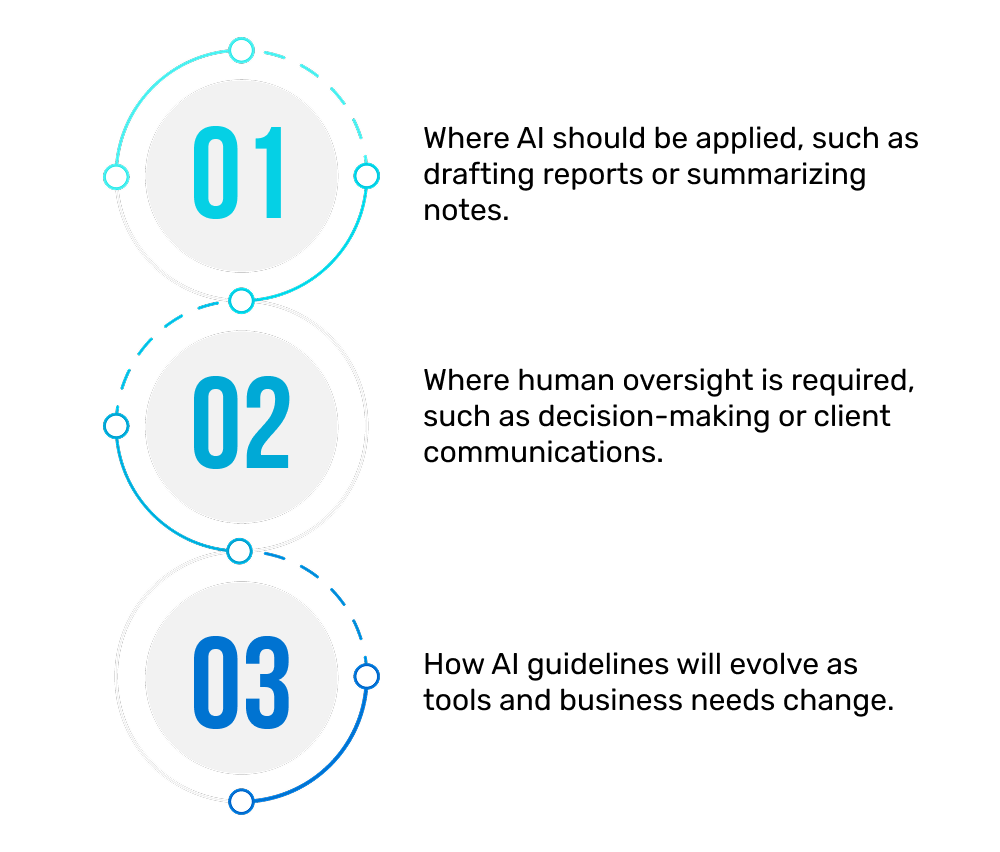
When expectations are clear, employees know how AI fits into their work, where their judgment matters most, and what responsible use looks like.
Step 2: Create an Environment Where Curiosity Feels Safe
Learning stops when employees fear embarrassment. Curiosity improves learning when it is welcomed and encouraged.
HR and L&D teams can guide leaders to:
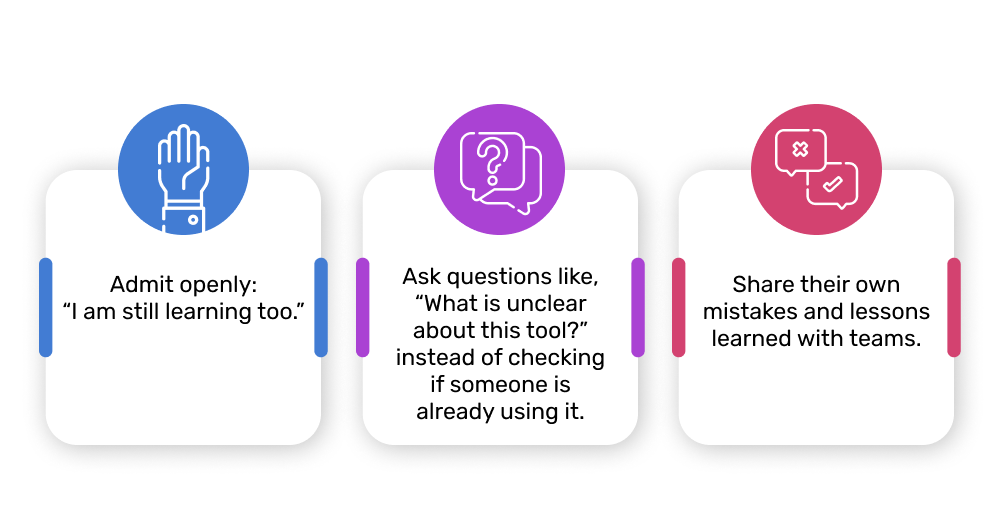
When curiosity is normalized, employees feel safe asking questions, experimenting, and engaging honestly.
Step 3: Give Employees Room to Experiment
Confidence grows through practice, not observation. Many employees avoid testing AI tools for fear of being judged or producing imperfect results.
HR teams can support experimentation by:
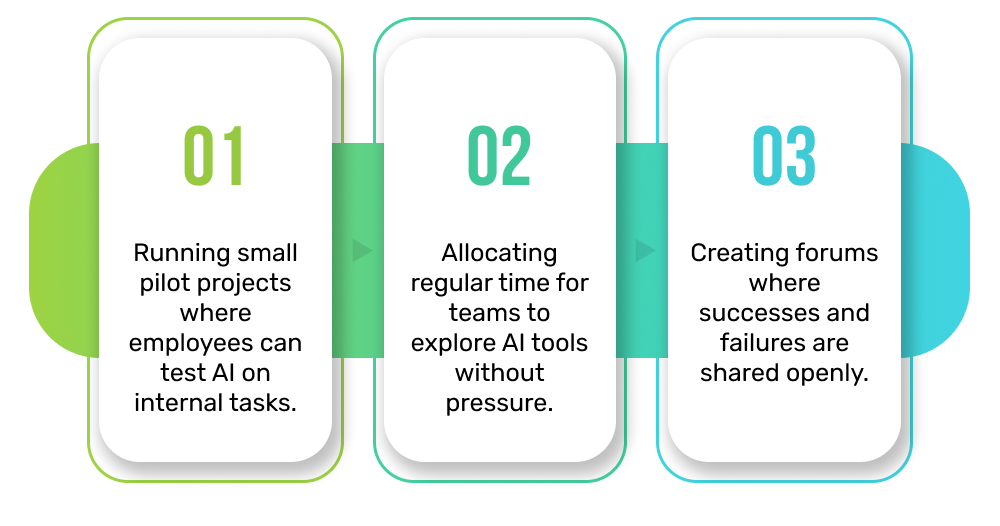
When employees can experiment without consequences, they move from pretending to understanding and building real skills.
Step 4: Make Peer Learning the Default
Employees often learn new technology faster from colleagues than from formal training. Peer learning spreads knowledge, encourages collaboration, and strengthens confidence.
HR and L&D teams can foster peer learning by:
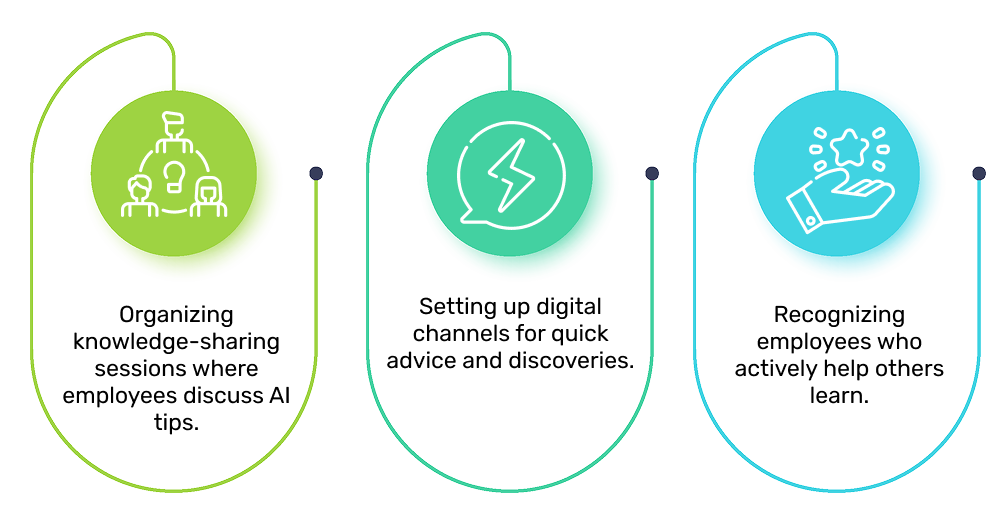
Collaborative learning removes the pressure to appear perfect and encourages teams to grow together.
Step 5: Keep Human Judgment at the Center
AI generates outputs, but humans remain responsible for decisions. If employees believe AI is replacing them, anxiety rises. When they see AI as a tool that supports their judgment, confidence increases.
HR can reinforce this by:
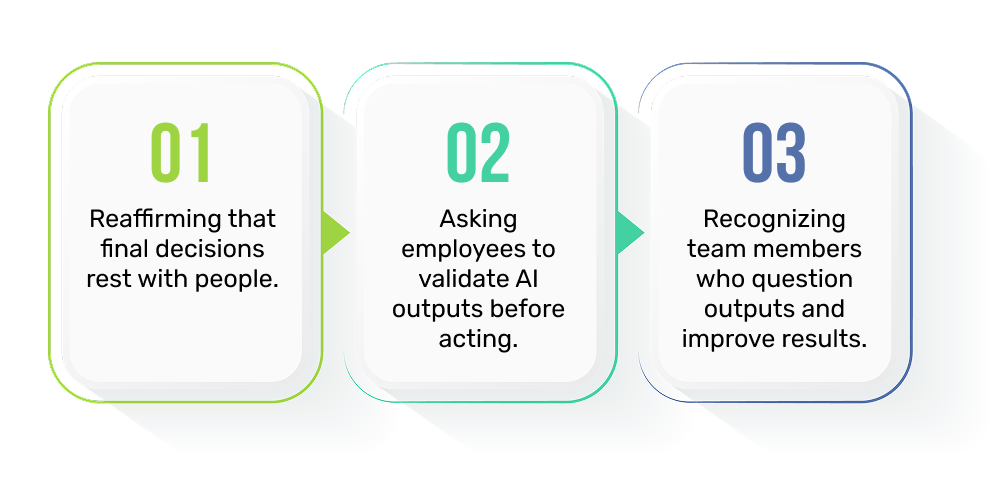
Balancing AI assistance with human judgment ensures employees feel valued and in control.
Build an AI-Ready Workforce with KnowledgeCity Courses
When employees feel they have to fake AI skills, organizations never get the full benefit. Mistakes increase, potential goes unused, and innovation slows. Real progress happens when teams feel safe to learn openly instead of hiding what they don’t know.
KnowledgeCity helps organizations turn AI adoption into real capability. Our AI-focused courses cover a broad spectrum of topics, so your employees can find solutions to the challenges they face, whether it is automating routine tasks, implementing AI in sales and marketing, making HR more effective, applying AI in the supply chain, or mastering large language models like ChatGPT and Gemini. With 50,000+ premium training videos, our learning library gives teams the guidance they need to practice, experiment, and grow confidently.
The strongest teams are not the ones who appear to know AI. They are the ones who actually do. Equip your organization with the knowledge, tools, and culture to make AI adoption real, practical, and lasting.