When organizations face budget reviews or strategic shifts, training programs often come under scrutiny. As a leader, you want to know: Is our investment in employee development truly driving results?
It’s a valid and important question. While participation in courses, webinars, and workshops is easy to track, the true value lies in what happens next. Can the training be linked to improved performance, stronger engagement, or measurable business outcomes?
That’s why measuring the return on investment (ROI) is essential. It ensures training isn’t just a cost—but a contributor to growth, efficiency, and long-term success.
In this blog, we’ll explore practical methods to assess training impact and demonstrate how professional development supports meaningful business progress.
Why ROI in Corporate Training Matters
Training takes time, effort, and money. Whether you’re building an internal leadership program or using an external platform for compliance training, it all comes with a price tag. But if done right, the payoff can be significant.
Here’s what well-executed training often leads to:
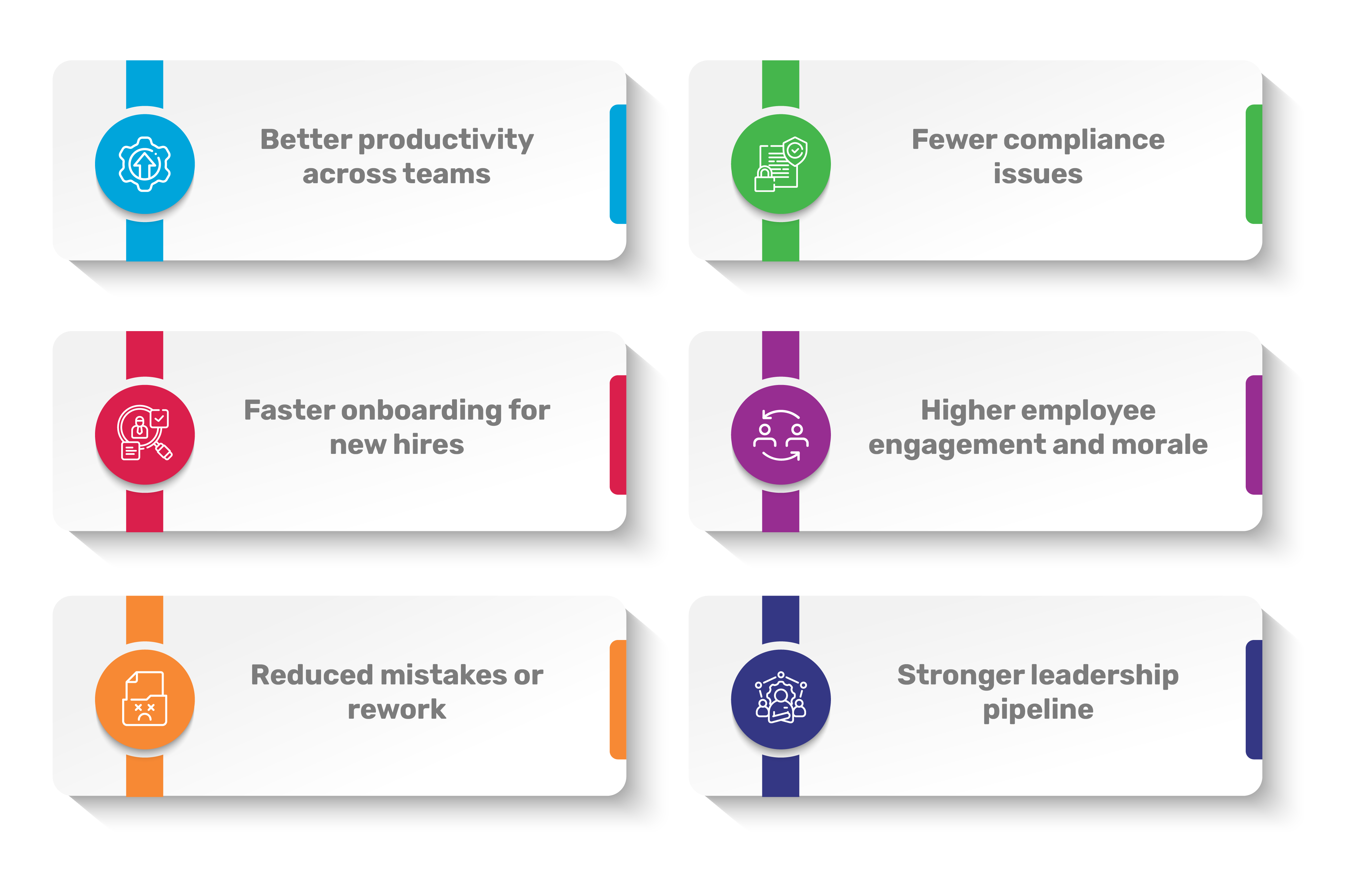
Despite these outcomes, most organizations still struggle to clearly connect training to business performance. In fact, only a small percentage of leaders say they can confidently link learning efforts to actual business results.
That’s a missed opportunity—and one that you can fix by measuring ROI in a smarter way.
What Counts as “Return” in Training?
Training doesn’t always produce immediate, direct financial returns like an investment in equipment might. However, the return is still real, just measured in different ways. The benefits of training often show up in long-term, impactful results that may not be immediately obvious but are crucial for the organization’s success.
Here are examples of valuable returns from training:
- Sales training that increases revenue
- Leadership programs that reduce turnover
- Compliance training that avoids legal penalties
- Customer service training that improves satisfaction scores
- Technical training that reduces downtime or errors
Each of these outcomes contributes to the organization’s success, and many can be measured if you know where to look.
The ROI Formula (and How to Apply It)
When you want to know if your training is worth the investment, use this simple ROI formula:

Let’s walk through how this works in practice.
Step 1: Calculate Your Total Costs
This includes everything you spent to deliver the training, such as:
- Cost of external trainers or facilitators
- Subscription to any training platform or software
- Materials or tools used (like handbooks or e-learning modules)
- Employee time spent attending the training
- Any venue, equipment, or travel costs (if applicable)
Example:
Let’s say your total training costs were $50,000.
Step 2: Estimate the Total Benefits
Next, calculate how much value the training created. This can be:
- Money saved (e.g., reduced turnover, fewer errors, less downtime)
- Money earned (e.g., increased sales, higher productivity)
- Avoided costs (e.g., fewer legal risks, better compliance)
Example:
After the training, your company reduced employee turnover and saved $120,000 in hiring and onboarding costs.
Step 3: Plug the Numbers into the Formula
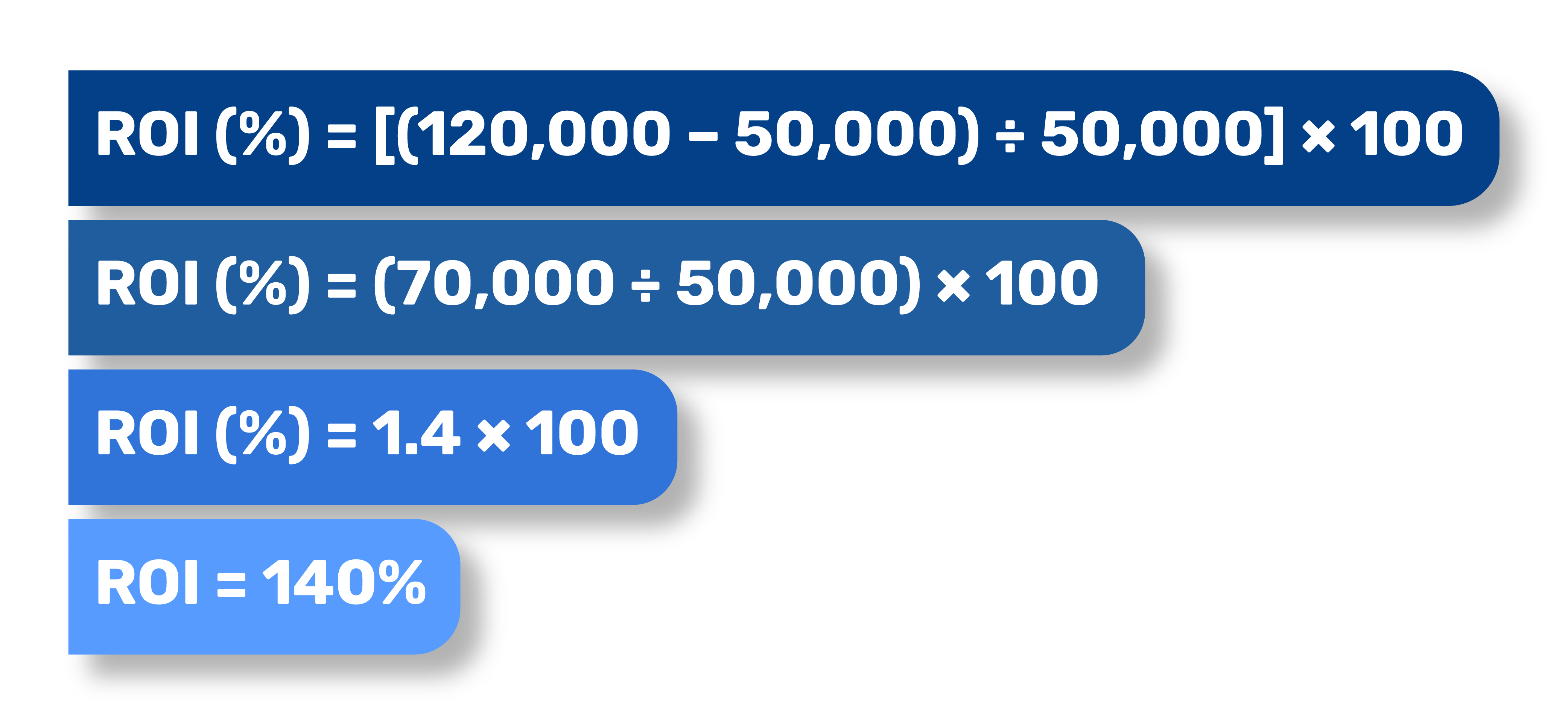
That means:
For every $1 you spent on training, you got $1.40 back in value.
Tip: Even if your “benefit” isn’t money right away, track it.
You can always assign a financial value to certain things later. For example, improved employee retention often saves thousands over time. Start by capturing the change, then connect it to cost savings or gains as you go.
Don’t Ignore the Soft Metrics
Not every benefit has a clear dollar value right away. And that’s okay. Some of the most valuable changes are more qualitative:
- Increased confidence in employees
- Better collaboration within teams
- More proactive problem-solving
- Greater ownership and accountability
To track these, use tools like:
- Before-and-after employee surveys
- Pulse checks and engagement scores
- Feedback from peers and managers
- Self-assessments
- Focus groups or interviews
Over time, soft improvements lead to hard results. For example, more engaged employees are statistically more productive and more likely to stay with the company.
Tie Training Directly to Business Goals
One of the best ways to show ROI is by linking every training initiative to a clear business outcome.
Here are a few examples:
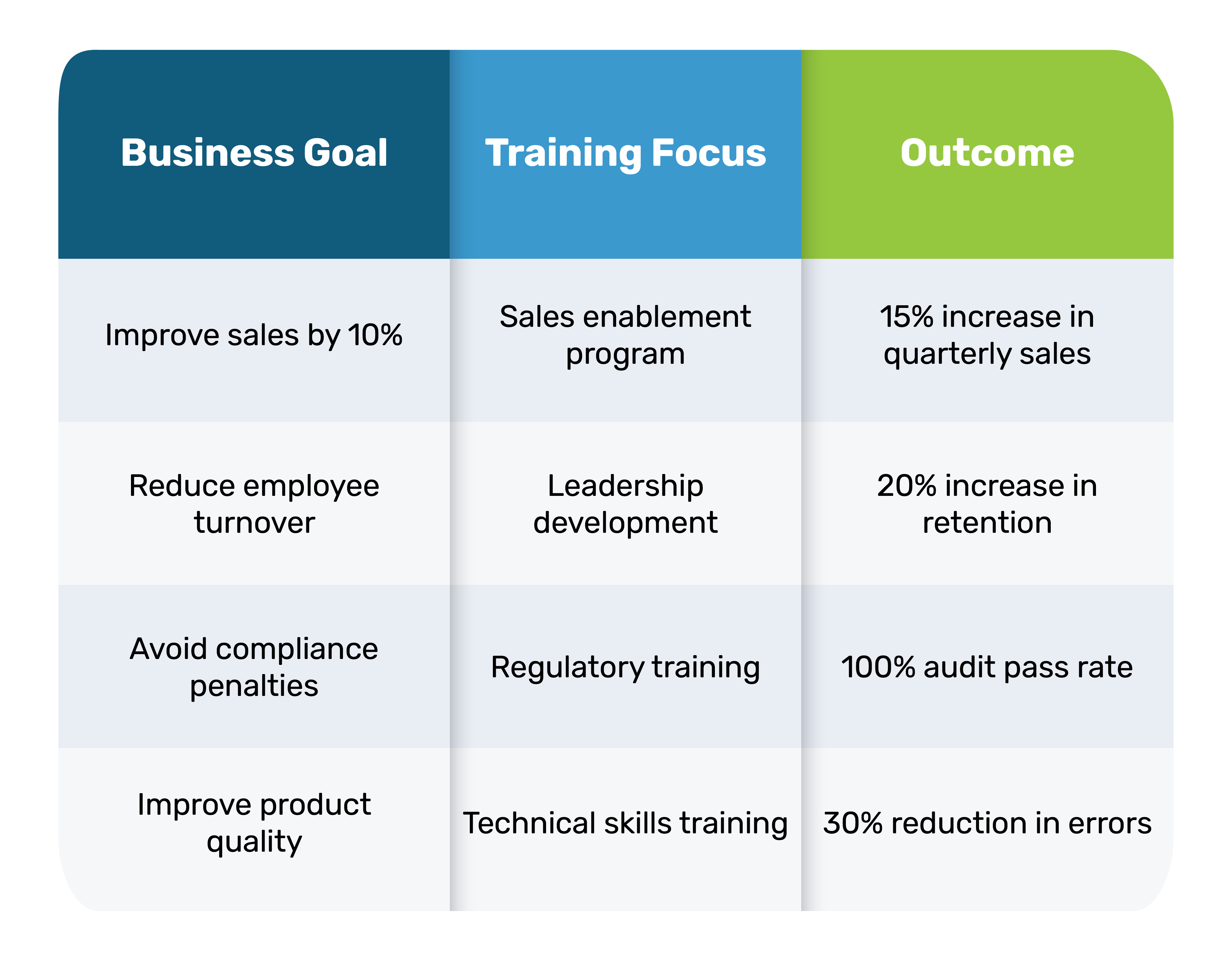
When your training strategy starts with a business problem, it becomes easier to measure its effectiveness and gain buy-in from decision-makers.
Invest in Training, Invest in Growth
Employee training and development isn’t just about meeting HR requirements—it’s about unlocking potential. When done with purpose and measured effectively, it becomes a key driver of business success. While not every session may show immediate financial returns, consistent and targeted development builds a workforce that drives long-term growth.
At KnowledgeCity, we believe that training aligned with business goals, tracked with intention, and continuously refined doesn’t just pay off—it compounds. Our comprehensive eLearning solution is designed to help businesses strategically develop their teams, unlocking their full potential while clearly demonstrating value every step of the way.