Every leader knows the feeling: the world of work is moving faster than any playbook can keep up with. AI is no longer a tool in the background; it’s shaping decisions, defining priorities, and changing how people experience work every day. What once took hours of analysis or human judgment can now be completed in moments, creating both incredible opportunity and real responsibility.
Guiding teams through change is just one challenge. Leaders also need to keep people engaged, encourage creative thinking, and make sure every action is purposeful, all while using insights effectively and keeping people at the center of decisions.
This blog takes a deep look at how AI is transforming human resources, marketing, leadership, and routine tasks, and outlines what leaders can do to harness its potential while safeguarding culture, performance, and long-term success.
How AI is Transforming Human Resources
Human resources has evolved beyond administrative tasks to play a pivotal role in driving organizational success. AI now handles routine processes such as benefits management, attendance tracking, and initial candidate screening, freeing HR teams to focus on initiatives that improve engagement, retention, and professional growth.
Beyond automation, AI analytics help uncover patterns in employee turnover, engagement, and absenteeism. It can also support performance reviews by providing consistent, data-driven feedback and identifying opportunities for development. With these insights, HR leaders can address retention risks and skill gaps proactively, before they impact overall performance.
Predictive workforce analytics further enable HR teams to anticipate training needs and design learning programs that strengthen essential capabilities. When leaders across the organization actively support the use of these insights, HR can move from transactional work to initiatives that enhance culture, performance, and career development. This approach not only improves employee satisfaction but also drives stronger business outcomes and sets a benchmark for similar transformations across other departments.
How AI is Redefining Marketing
Marketing teams are using AI tools to understand customer behavior, improve campaigns, and deliver personalized experiences. The uses of AI in marketing include tasks like analyzing data, testing campaigns, and segmenting audiences that used to take hours, which can now be done in minutes. This gives marketers more time to focus on creative strategy, brand positioning, and connecting with customers.
AI can predict campaign results, suggest content for specific customer groups, and even create draft messages for testing. Teams can try different messages, formats, and channels more quickly and adjust their strategies based on real-time data instead of just intuition.
Leaders should help marketing teams learn to read AI insights and use them with human judgment. HR and L&D teams can train employees to turn data into clear actions. This makes campaigns more effective and creates a culture where creativity is guided by facts. AI handles the analysis, while humans focus on ideas and building relationships.
How AI is Innovating Leadership
Leadership is no longer only about intuition and experience; AI is giving leaders a new lens to understand their teams, operations, and markets in near real-time. Instead of waiting for quarterly reports or employee surveys, leaders can now see emerging trends, risks, and opportunities as they happen.
For example, AI can reveal early signs of disengagement in a high-performing team, flag potential skill shortages before projects are affected, or uncover process inefficiencies that were previously invisible. This allows leaders to act proactively rather than reactively, making decisions that prevent problems and capitalize on opportunities.
AI doesn’t replace judgment; it amplifies it. Leaders must learn to interpret AI insights, prioritize actions, and guide their teams with clarity and purpose. This means using data to coach employees effectively, align resources with strategic priorities, and create space for innovation. Organizations led this way become more adaptive: teams respond faster to change, decisions are better informed, and overall performance improves.
In short, AI transforms leadership from reactive management to strategic foresight, enabling leaders to focus on where human guidance adds the most value.
How AI is Streamlining Routine Tasks
Repetitive, time-consuming tasks such as data entry, reporting, and information aggregation are increasingly automated by AI. Automating routine tasks reduces errors and speeds up work, allowing employees to focus on judgment-driven, strategic, and creative activities.
In finance, for example, AI can compile reports, flag anomalies, or reconcile accounts. In customer service, AI chatbots and automated responses handle common inquiries, giving teams more time to address complex cases or high-value client interactions.
Leaders should identify areas where AI-driven automation can deliver measurable gains and ensure employees are trained to use these efficiencies effectively. By shifting focus to high-impact work, organizations can boost productivity, engagement, and overall value creation.
Best Practices for Leadership in the AI Era
Integrating AI into the workplace offers leaders and decision makers both opportunities and challenges. Success requires a balanced approach that addresses technology, people, and processes together. The following best practices provide a roadmap for leaders to guide organizations through AI adoption while building long-term adaptability and growth.
1. Approach AI strategically
AI should be used to solve real business problems, not just as a new tool. Leaders should:

By linking AI initiatives to clear business goals, organizations ensure investments deliver positive results and avoid wasted effort.
2. Build a strong data foundation
AI depends on high-quality, organized, and accessible data. Leaders should:
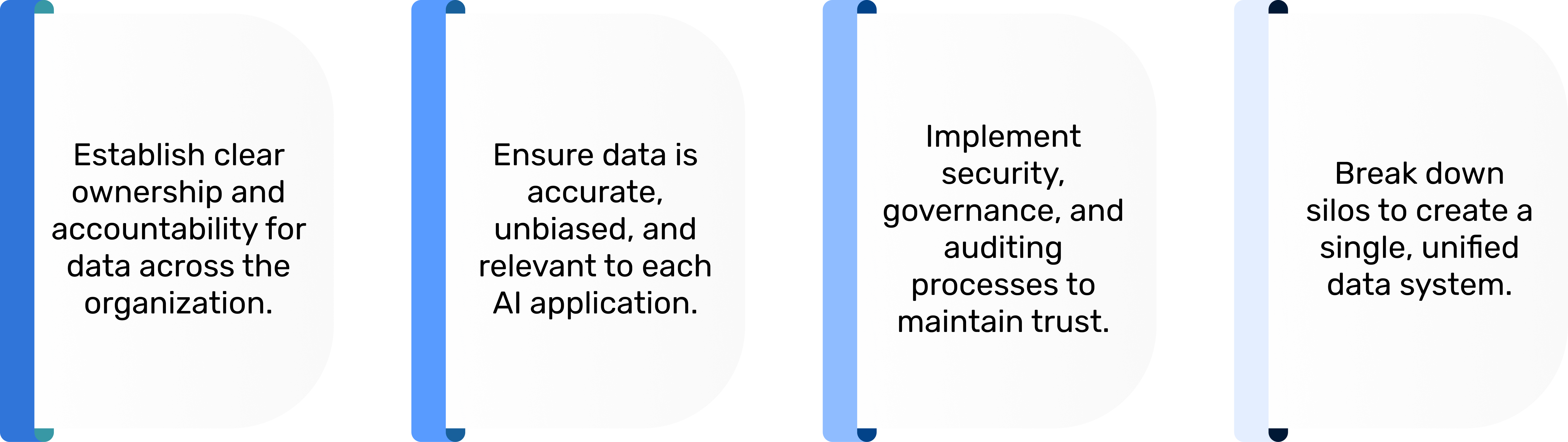
A well-managed data infrastructure improves efficiency, reduces costs, and provides decision-makers with reliable insights. Making information available across teams also empowers employees to act on insights quickly.
3. Develop your workforce and manage change
AI changes how work is done, which means roles and skills evolve. Leaders should:
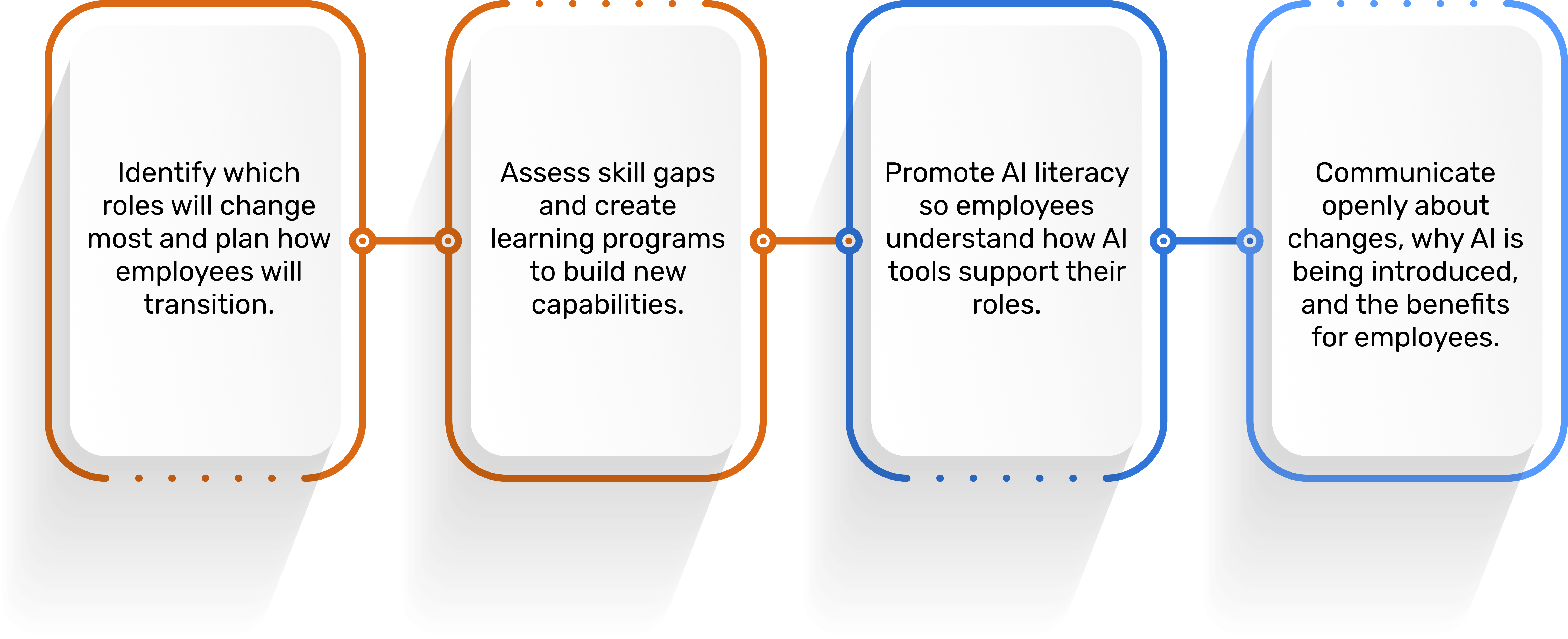
Providing training, support, and clear communication reduces resistance and encourages employees to embrace AI. It also helps teams spot new ways AI can improve processes within their own work areas.
4. Balance short-term gains with long-term transformation
While AI can deliver immediate efficiency improvements, leaders must also plan for the future:

Focusing on long-term transformation ensures that AI adoption strengthens the organization’s resilience, innovation, and competitive advantage.
5. Make AI part of the organizational culture
The most successful AI initiatives are integrated into the way people work:
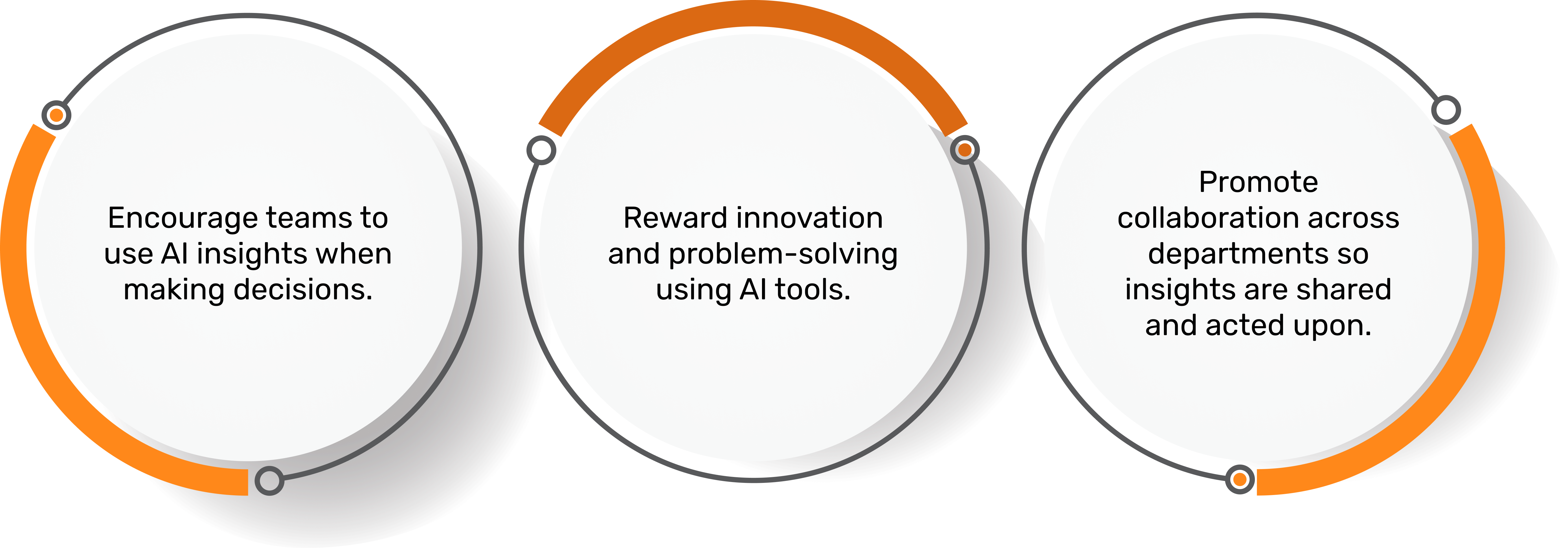
Embedding AI into the culture helps employees feel ownership over its use and encourages proactive adoption rather than passive compliance.
By following these best practices, leaders can guide their organizations through AI adoption effectively, creating a workplace that is adaptable, efficient, and ready for future challenges.
AI Is Transforming Every Part of the Workplace
The examples covered in this blog, HR, marketing, leadership, and routine tasks, represent only a fraction of where AI is making an impact. Today, AI is reshaping nearly every function, from operations and finance to customer experience, sales, and product development. Its influence is no longer limited to specific departments; it’s becoming an integral part of how organizations operate and compete.
To help teams adapt and thrive in this AI-driven workplace, our learning library offers practical courses designed to build AI skills, critical thinking, and decision-making capabilities. Whether you want to train HR, marketing, leadership, or operational teams, our resources provide the guidance your employees need to use AI effectively and responsibly.
We help organizations prepare for the future of work by equipping teams to leverage AI confidently and strategically.