As an HR professional, you already know that employers are searching for a combination of outstanding skills in new recruits.
- Hard skills: The type of nuts-and-bolts education, knowledge, and expertise associated with every profession.
- Soft skills: Personal qualities and professional capabilities that enhance the morale, creativity, and productivity of a workplace.
Increasing data reveals that on-the-job excellence requires a combination of these two skill sets. Stellar employees aren’t only great at the technicalities of their jobs, they’re also skilled communicators, collaborators, and team players.
As it turns out, hard skills are just the starting point for new-hire consideration. Soft skills (also called “durable” skills) are the true drivers of an employee’s long-term success and advancement within a company.
Soft Skills: What Are They?
Soft skill “wanted” lists will vary by job title and geographic region, but these soft qualities are regularly requested (or required):
- Communication
- Teamwork
- Leadership
- Adaptability/Flexibility
- Critical thinking
- Work Ethic
- Analytical & Problem Solving
- Conflict Resolution
- Emotional Intelligence
- Mentoring
- Organization
- Creativity
- Collaboration
A key difference between hard and soft skills is that hard skills are very job-specific (e.g., database expertise for a technology job, money handling for bank tellers, interviewing tactics for reporters), while soft skills benefit every job. Soft-skill desires may be prioritized to match specific jobs (e.g., leadership for management positions, creativity for graphic designers, problem-solving for social workers), but every soft skill is a welcome enhancer for individual/team performance and the overall integrity, morale, and culture of a company.
The Secret is Out
More employers are incorporating the soft skills “secret sauce” into job requirements as they recognize the positive impact on their workforce.
A 2021 analysis of 82 million job postings found that:
- Nearly two-thirds (50 million) requested soft skills.
- A third (29 million) requested at least three specific soft skills.
- Seven of the 10 most in-demand skills across all postings were soft skills.
- More than 50 percent requested leadership and communication “soft” competencies.
In addition, employers ranked the soft set of dependability, teamwork/collaboration, flexibility, and problem-solving at the top of their wish lists in The Future of Work 2021: Global Hiring Outlook.
What does this mean for HR professionals? Soft skills aren’t just a bonus for job candidates to possess, they’re a required component of every job search.
Help With Assessing Soft Skills
It’s easy to understand why organizations want to onboard employees who excel at both the technical skills of a job and such sought-after qualities as leadership, collaboration, and communication. But assessing a candidate’s soft qualities can be more difficult than their hard-skill counterparts.
Anyone can add an impressive list of soft attributes to their resume—or answer a confident “YES!” to being a team player, good communicator, and emotionally intelligent decision-maker. So how do you measure the validity of these tough-to-quantify skills?
Strictly relying on your intuition is not the way to go. These four objective tools will help you decipher the truth:
- Start Broad to Help Narrow Your Search.
The Hard Facts About Soft Skills suggests starting by reviewing your organization’s value statements and culture, which highlight the soft qualities your workforce values most. In addition, take note of the personality traits the most successful candidates in your company share.
- Clarify What’s Most Needed and Desired
Ask executives which soft skills they think are most needed and wanted in the workforce. And before you interview candidates, ask the hiring manager which soft skills are most applicable for success—for the job and as a team member.
- Ask Open-Ended Interview Questions
Open-ended questions give candidates the chance to personalize their answers, and they give you the chance to take note of soft skills mentioned in their replies. Behavioral “tell me about a time…” questions and hypothetical “what would you do in this circumstance?” inquiries are two effective methods.
- Perform Structured Interviews & Skill Assessments
Workable promotes structured interviews as a great way to objectively assess job candidates’ soft merits. The process includes asking each candidate the same fixed list of interview and follow-up questions, in the same order. Choose questions that are phrased to help evaluate the specific soft skills desired for a job.
If leadership is a priority, for example, Workable suggests asking:
- Tell me about a time you took the lead when your team was in a difficult position.
- What would you do if your team members disagreed with your instructions?
If adaptability is key, ask:
- Tell me about a time when a project’s priorities changed suddenly, and you had to adapt.
- What would you do if you were assigned multiple tasks with the same deadline?
Standardized scoring is another important part of the structured interview process, with all interviewers using the same system to rate candidates’ answers. Choose a scoring system you like. Some use a pass/fail format, others have a low-to-high rating system, and Workable uses this simple “Yes, No, or Definitely” format:
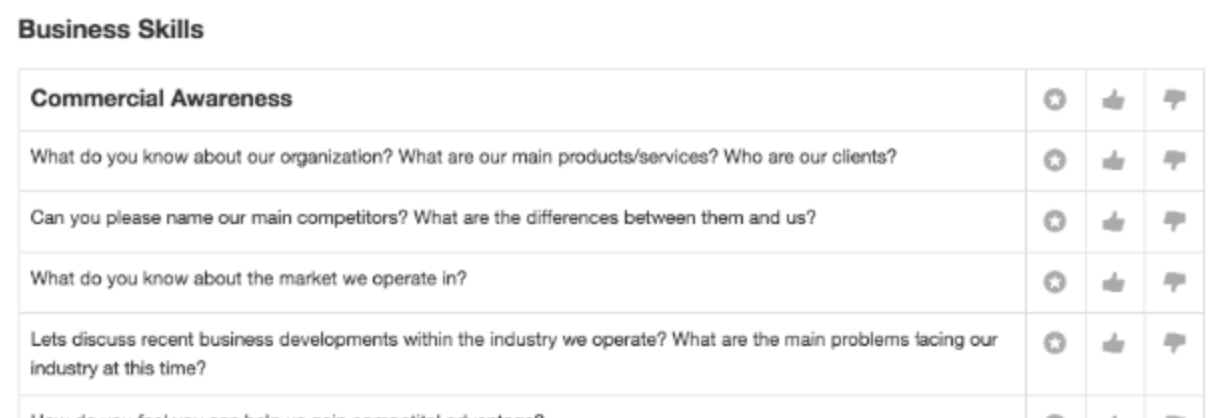
Structured interviews and scoring systems help to keep subjective biases from creeping into candidate ratings, providing a more valid interpretation of each person’s soft qualities.
If you’d like more ideas for unearthing candidates’ soft skills, consider 12 Effective Ways to Assess Candidates’ Soft Skills, which includes these suggestions:
- Ask candidates to list the soft skills they think are required to excel at the job.
- Have candidates list the soft skills they possess, then have them rank their skills from strongest to weakest.
Become a Soft Skill Expert
All signs point to soft skills retaining their elevated status on employers’ talent acquisition wish lists, so the more you learn about these hard-to-quantify qualities and incorporate them into your candidate searches, the more successful you will be.
To help you become a super sleuth at detecting soft-skill clues and developments, be sure to explore the growing list of soft skills courses in KnowledgeCity’s learning library, including:
- Maintaining Soft Skills in Remote Work Environments
- 3 Key Employee Soft Skills That Will Drive Pandemic Recovery
- How to Measure the Effectiveness of Soft Skills
- Why Every Industry Can Benefit from Soft Skills Training
Also check out our Resources Page for free ebooks, whitepapers, case studies, and more.