Enjoying the preview?
This is the free first lesson. Get full access: request a demo or sign in.
Enjoying the preview?
This is the free first lesson. Get full access: request a demo or sign in.
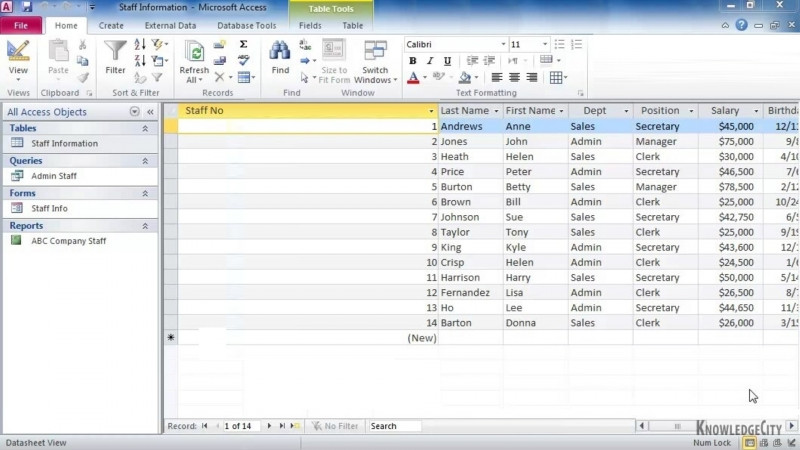
The difference between well-managed data and a confusing, disorganized database is the ability to write efficient queries. Subqueries enable you to write complicated queries in a simple way, opening up possibilities for even more sophisticated, powerful queries. Effectively executed queries can perform value calculations, join tables, and incorporate external data sources. They’re an essential tool for organizing your data for the best possible results.
Delve into a more detailed understanding of queries with this module. You’ll learn about more advanced ways to query data, such as writing subqueries and how to create relationships between your tables. We’ll go over the different types of joins to best support the needs of your queries, and you’ll be introduced to the four basic types of joins: outer join, inner join, full join, and cross join. Finally, we’ll explore how to write queries that can calculate values and how to query external data sources.
You will learn more advanced ways to query data, including writing subqueries, creating relationships between tables, using the different types of joins, writing queries that calculate values, and querying external data sources.
It introduces the four basic types of joins: outer join, inner join, full join, and cross join, and explains how to choose joins to best support the needs of your queries.
The lessons cover Querying With Calculated Values, Subqueries, Inner Joins, Outer Joins, Full Joins, Cross Joins, and Querying External Data.
It helps develop skills in Access Query Languages, Data Access, Extended SQL, Microsoft Access, Microsoft Data Access Components, and Query Understanding.
Subqueries enable you to write complicated queries in a simple way, opening up possibilities for even more sophisticated, powerful queries.