Enjoying the preview?
This is the free first lesson. Get full access: request a demo or sign in.
Enjoying the preview?
This is the free first lesson. Get full access: request a demo or sign in.
A good database application starts with a solid understanding of database fundamentals and design. This course on Microsoft Access 2021 Beginner will teach you how a database works and how to create an efficient, industry-standard compliant database design using Microsoft Access 2021. We will explore how to customize tables with the properties offered by Microsoft Access 2021, and you will learn how to design and create the four main types of queries - select, insert, update, and delete. You will also learn how to create and modify custom forms to turn your database into a full-fledged database application.
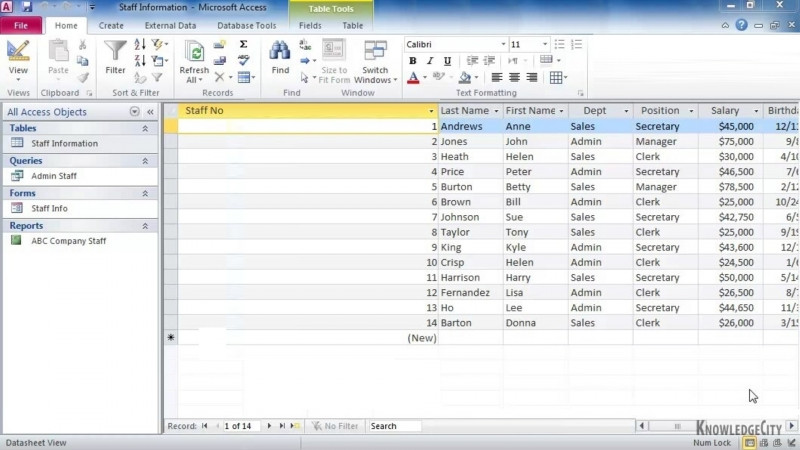
In this Microsoft Access 2021 Beginner course, you will learn what databases are and the user interface of Microsoft Access 2021. You will also learn how to install Microsoft Access 2021 and learn the basics of using Microsoft Access 2021 to design a good database implementation, create and edit tables, and create and design your own queries, forms, and reports.
This is a beginner course on Microsoft Access 2021, suited for learners who want to understand how a database works and how to create an efficient, industry-standard compliant database design using Microsoft Access 2021.
You will learn what databases are and the user interface of Microsoft Access 2021, how to install it, how to design a good database implementation, create and edit tables, and create and design your own queries, forms, and reports.
Yes. The course teaches you how to purchase, download, and install Microsoft Access 2021, and includes lessons on installing Access and on Microsoft 365 and Microsoft Accounts.
The course teaches how to design and create the four main types of queries: select, insert, update, and delete, and covers the Query Wizard, Query Designer, and SQL.
You will gain skills in Access Query Languages, Data Access, Database Programming, Microsoft Access, Microsoft Data Access Components, and Microsoft Forms.