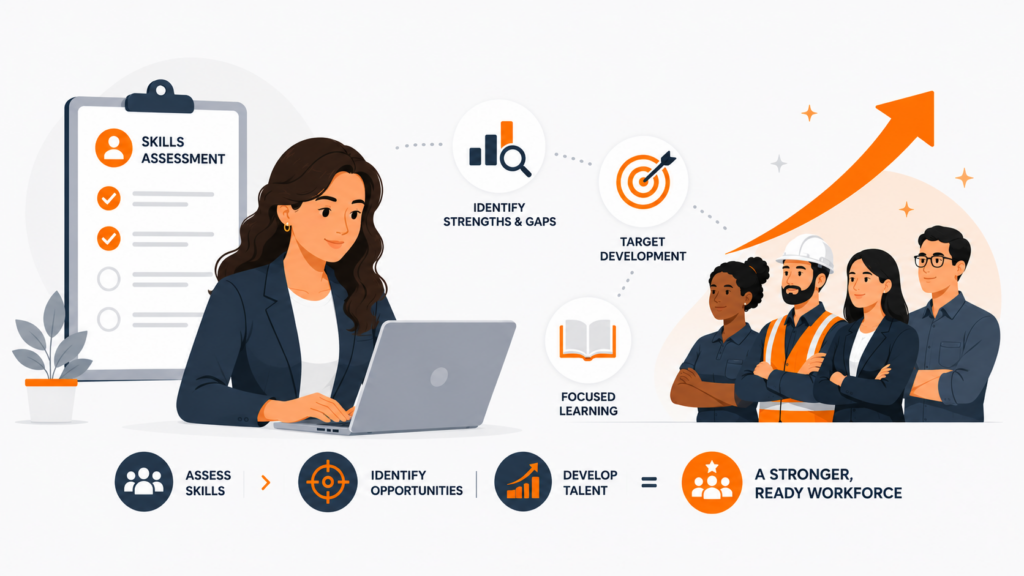
Employee engagement is a workplace mantra. Managers around the globe are thinking about how to create a culture where employees thrive and become committed members of the team. When a company is able to inspire its employees to adopt its goals through engagement, the company will see the benefits in productivity.
One way of doing this is to start with understanding how we as humans are inspired in the first place. What do we need to become committed and how do employers meet that need? If you could ask noted psychologist, Abraham Maslow, he might tell you to meet their hierarchy of needs.
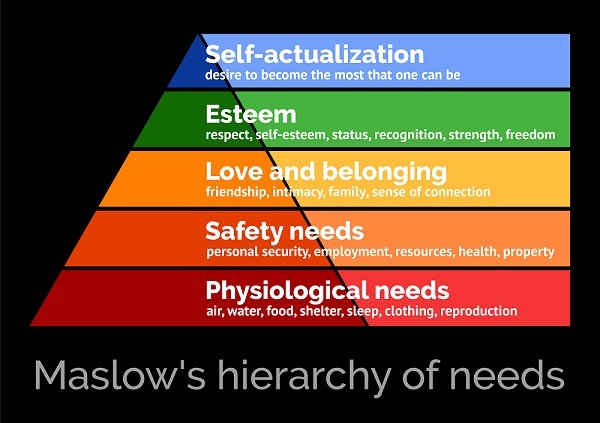
Who is Maslow and what is his Hierarchy of Needs?
Abraham Maslow proposed in a paper he wrote, “A Theory of Human Motivation” published in Psychological Review in 1943, that people’s motivations are unrelated to rewards or unconscious desires.
He theorized that people are motivated by what has become known as Maslow’s Hierarchy of Needs. The hierarchy is depicted in a pyramid that contains five levels. These levels include Physiological Needs, Safety Needs, Social Needs, Esteem Needs, and Self-Actualization.
According to SimplyPsychology.com, people are motivated to achieve each of the needs in the pyramid. After people fulfill the needs at one level they move on to the next. To progress up the pyramid, each lower need must be met.
Any time there is a failure to meet the needs at a lower level it disrupts the person’s ability to progress. Life is unpredictable. As situations arise these experiences can cause an individual to move back and forth between levels.
According to Maslow, only one in 100 hundred people ever become fully self-actualized. This is mainly due to our society which primarily rewards motivation based on esteem, love and other social needs.
How Does Maslow’s Hierarchy of Needs Help Us Understand Employee Engagement?
To understand how Maslow’s Hierarchy of Needs relates, we need to see the bigger picture.
Let’s start with Gallup’s “State of the American Workplace”. According to the report published last year, only 30 percent of employees are engaged. Another 52 percent are disengaged, and 18 percent are actively disengaged.
What exactly does that mean? It means that 70 percent of the American workforce is not committed to their organization’s goals and values. They are not motivated to contribute to the organization’s success. These workers are emotionally disconnected and less productive.
According to an article in Forbes, “Surprising, Disturbing Facts from the Mother of All Employee Engagement Surveys”, the leading factor that influences employee engagement is the relationship the employee has with their managers. Choosing the right leaders significantly impacts the workforce.
“Outstanding leaders go out of their way to boost the self-esteem of their personnel. If people believe in themselves, it’s amazing what they can accomplish.” —Sam Walton
According to a study by Deloitte, “Global Human Capital Trends 2014—engaging the 21st Century Workforce”, 65 percent of executives rated “overwhelmed employees” as an urgent need that must be addressed. The “always on” employee was built by mobile technology. We are always connected 24/7. The new “workaholic” lifestyle just increases with seniority and income.
In addition to employees being overwhelmed, some other reasons for disengaged employees are workload is too high, companies that do not invest in talent development, no advancement opportunities for high performers, non-inclusive culture, transitions in leadership.
“People leave managers, not organizations.” —Anonymous
The key to engaging employees, motivating your team, and increasing productivity, in the long run, is to invest in your workers. Redesign the position, add benefits that matter, change the work environment and develop your team and leadership. It is not always easy to re-engage a disengaged employee, but people aren’t motivated by the bottom line. They are motivated by the things that meet their hierarchy of needs.