
As the year comes to a close, it’s the right time to pause and review your training programs. This is the time to step back and understand how well your teams progressed, where their capabilities strengthened, and where they still need support. A thoughtful review helps you see whether training stayed aligned with organizational needs and how prepared your workforce is for the coming year.
A structured year-end check gives you a clear path forward. It helps you decide what to keep, what to improve, and what no longer adds value. The following eight steps outline a practical review you can rely on as you plan ahead.
Step 1: Reconstruct the Learning Year
Start by creating a complete picture of all the training activities that were delivered this year. This includes not only formal learning programs but also informal learning experiences facilitated by your efforts. Consider every channel, including online courses, instructor-led sessions, workshops, microlearning programs, mentoring, peer coaching, and any external vendor programs.
- Map each program to its intended purpose, whether it was onboarding, compliance, leadership development, or skill enhancement.
- Track participation rates and completion numbers to see which programs reached employees effectively.
- Record costs for each program to understand resource allocation and identify areas for improvement.
By reconstructing the learning year in this way, you gain a clear understanding of what was delivered, which programs performed well, and where there may be gaps.
Step 2: Identify Skill Gaps
After mapping the learning year, the next focus is understanding which skills employees have acquired and which still need attention. Feedback and observations can provide powerful insights without needing complex analytics.
- Review employee feedback and survey responses to see which programs truly helped them develop new skills.
- Gather input from managers about areas where employees still face challenges or gaps.
- Compare the skills addressed in training with the skills most critical for success in the upcoming year.
- Look for recurring gaps or emerging skills that will be important for organizational goals.
This process allows you to focus future training on the most pressing skill needs, making your learning initiatives more targeted and effective. Identifying gaps is important, but understanding how well your programs addressed these needs is equally critical.
Step 3: Evaluate Program Effectiveness Beyond Completions
Next, assess how well this year’s programs actually worked. Completion numbers alone do not show impact; you need to measure whether employees applied skills and if the training improved outcomes.
Look at results such as:
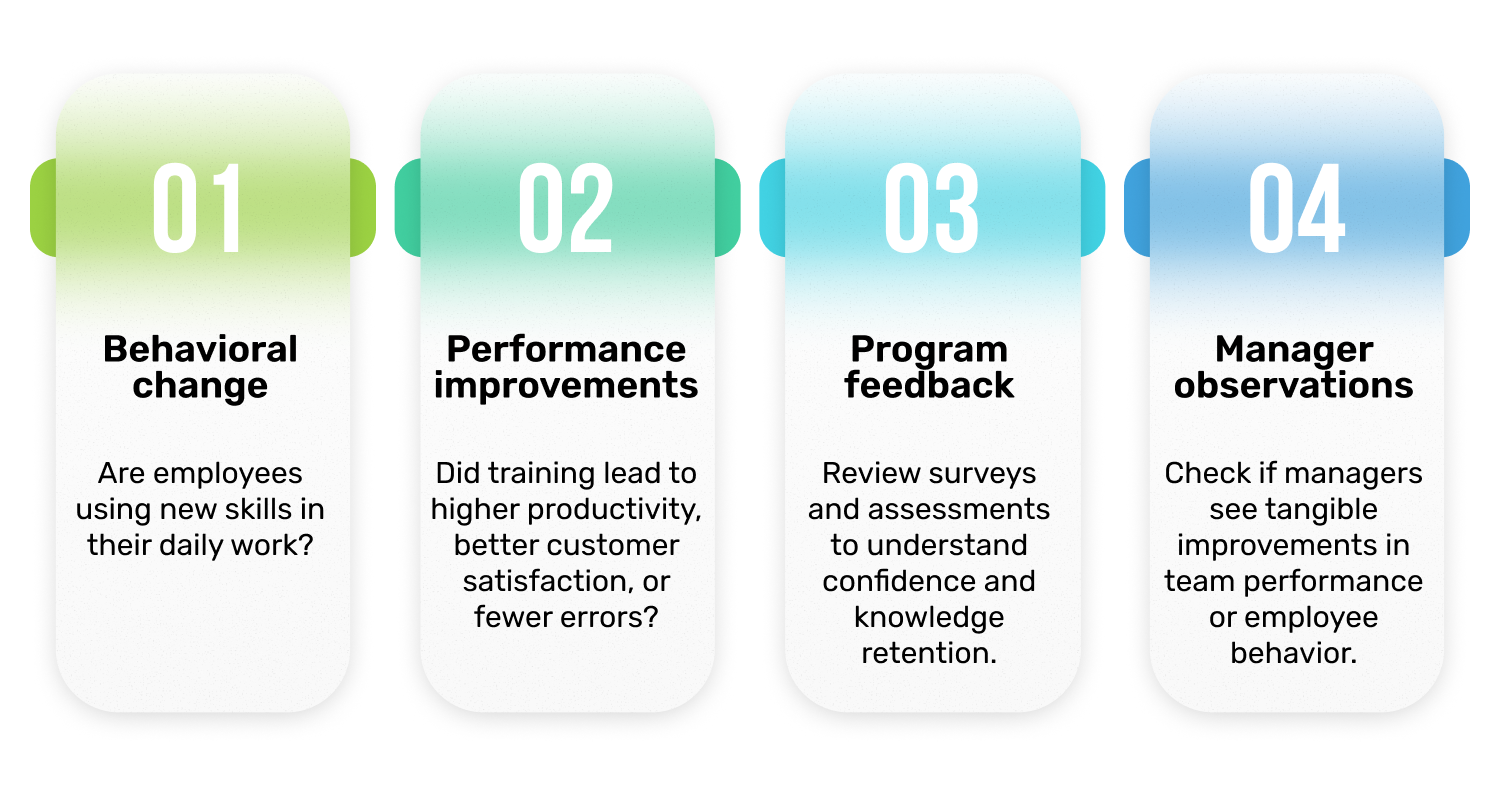 Evaluating effectiveness helps you decide which programs to continue, enhance, or replace next year, ensuring your training delivers positive value to employees and the organization.
While assessing program effectiveness, it’s also important to ensure all mandatory training is complete and documented.
Step 4: Confirm Compliance and Documentation
Compliance is a non-negotiable responsibility for HR and L&D professionals. At year-end, ensure that all mandatory training is complete and accurately documented. This includes state-specific sexual harassment prevention training, workplace safety, cybersecurity, DEI initiatives, and role-specific certifications.
Check LMS reports to identify employees who have not yet completed required courses and schedule any make-up sessions immediately. Make sure all certificates and records are organized and easily accessible for audits or leadership reporting. Doing this protects the organization from risk and demonstrates your thoroughness as a professional.
At the same time, note any compliance trends. For example, if certain departments consistently miss deadlines for mandatory courses, this insight can guide communication strategies or refresher programs next year.
Once compliance is confirmed, you can review the resources invested in learning and assess whether the programs delivered value for the organization.
Step 5: Consolidate L&D Spend and Assess Program Impact
Understanding the value of your learning investments is essential for strategic planning. At year-end, review the total spending on training programs, including external vendors, internal resources, and administrative costs. Look beyond the numbers and evaluate whether the programs delivered positive results aligned with organizational goals.
For example, did sales training translate into higher conversion rates? Did leadership programs result in better team performance or retention? Identify programs that consistently deliver strong outcomes and those that have limited impact. Consider consolidating overlapping programs, negotiating vendor contracts, or shifting to in-house solutions where appropriate.
This step allows you to optimize your budget and plan a more strategic L&D investment for the upcoming year. Your decisions will ensure resources go where they deliver the most value for employees and the organization.
Numbers and costs tell part of the story, but employee experiences and success stories reveal the human impact of training.
Step 6: Gather Impact Stories
Data and metrics are important, but stories show the human side of learning. Collect real-life examples of how training has influenced employee performance, engagement, and behavior.
Reach out to managers to highlight employees applying new skills effectively. Encourage employees to share experiences where training helped them solve problems, improve processes, or handle challenging situations. Document improvements in productivity, customer service, safety, or compliance that resulted from learning initiatives.
These stories are particularly valuable when reporting to leadership. They bring training to life, making the impact tangible and memorable. When combined with quantitative data, they provide a powerful narrative of your contribution to the organization.
Collecting stories also highlights opportunities to reinforce learning through managers, ensuring skills are applied consistently.
Step 7: Reinforce Skills Through Managers
Training alone is not enough; employees need support to apply new skills consistently. Managers play a crucial role in reinforcement. Provide them with practical tools such as discussion prompts, micro-practice exercises, or quick-reference guides. Encourage managers to give feedback, recognize skill applications, and provide coaching where needed.
By actively partnering with managers, you ensure that employees retain their learning and incorporate new skills into everyday work. Reinforcement also strengthens the link between training and measurable business outcomes.
With insights on skill application, you can now build a roadmap to guide learning initiatives strategically in the coming year.
Step 8: Build a 12-Month L&D Roadmap
With all insights now in hand, the final step is to translate them into a focused plan for the coming year. The roadmap does not need to be complicated. It simply needs to show what you will invest in, why it matters, and how you will measure progress.
A practical roadmap includes a few core decisions:
- What continues:
The programs that showed strong skill application, positive feedback, or measurable performance improvements. - What changes:
Programs that addressed a real need but require better delivery, updated content, or a different format. - What stops:
Initiatives that consumed time or budget without producing meaningful outcomes. Once these decisions are clear, outline how the year will move forward. - Key priorities for the year:
The capabilities your organization must strengthen based on this review (for example, leadership depth, customer handling, digital fluency, compliance consistency). - Expected outcomes:
Simple, trackable goals such as stronger team performance, fewer compliance gaps, better onboarding effectiveness, or reduced error rates. - Timing and sequencing:
A light quarterly view of when major programs will run, when pilots will launch, and when evaluations will take place. - Budget direction:
Where investment will increase, where it will tighten, and which vendor or internal solutions will support each priority.
This roadmap gives you a clear starting point for the new year and helps leaders see that every training decision is purposeful, supported by evidence, and tied to the organization’s goals.
Bringing Your Year-End Review Together
When you reach this point, you’ve done more than complete an administrative checklist. You’ve gathered a clear picture of what your teams learned, where they struggled, and which programs genuinely supported the organization. This is more than just an annual requirement; it’s the groundwork that shapes the quality of your workforce for the year ahead.
A strong year-end review gives you three advantages:
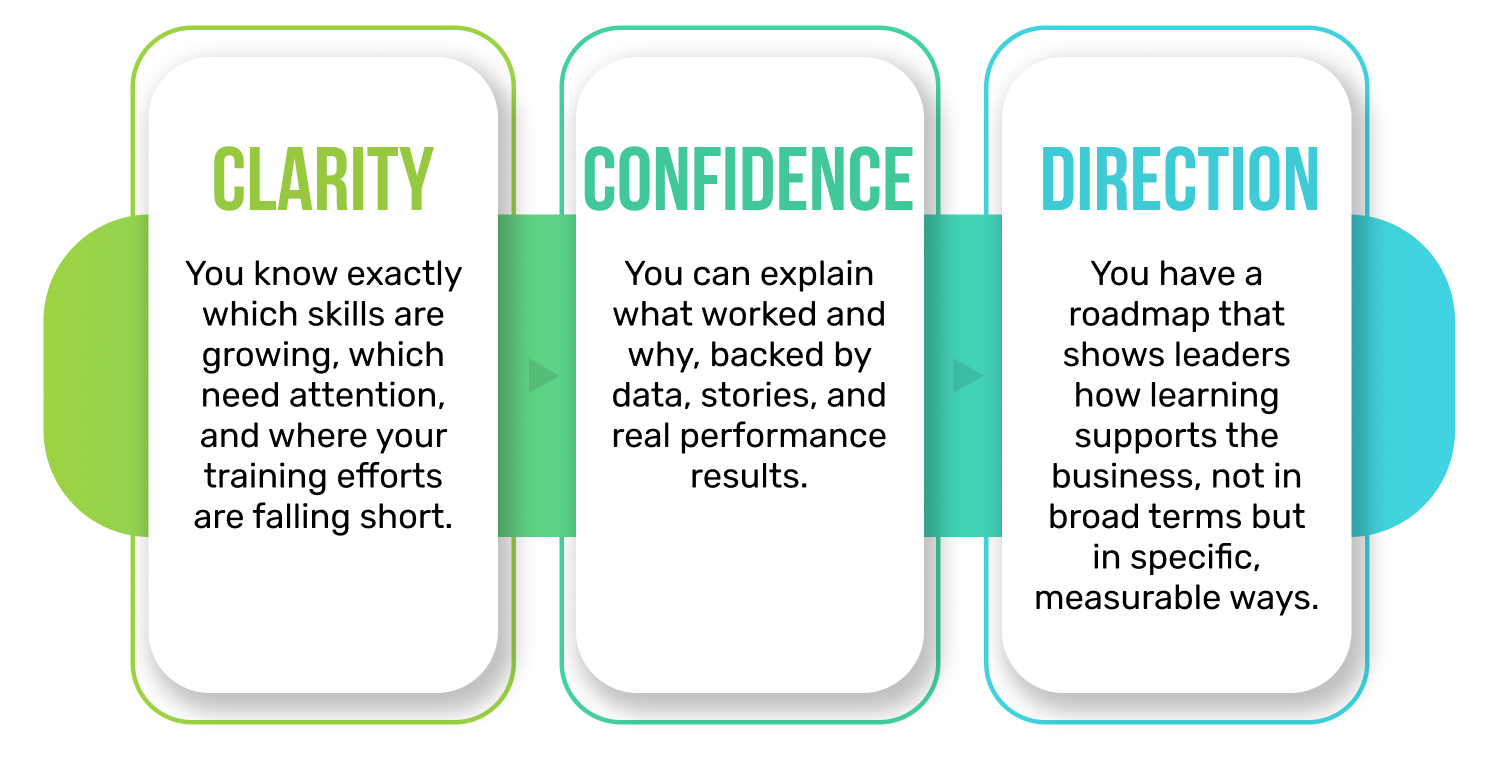
What you do next matters. The insights you’ve gathered should guide sharper decisions, smarter investments, and more focused programs. Instead of repeating last year’s plans, you now have the evidence to prioritize what your people truly need.
This is how L&D becomes strategic. This is how HR earns influence. This is how organizations grow, with intention, not assumptions.
As you finalize your roadmap for the coming year, treat it as a living plan. Revisit it every quarter, adjust based on new challenges, and use what you’ve learned this year to strengthen how teams learn, perform, and support the business.
A thoughtful end-of-year review doesn’t just close the year. It elevates the next one.

 KnowledgeCity








Subscribe to Our Newsletter
Join 80,000+ Fellow HR Professionals. Get expert recruiting and training tips straight
to your inbox, and become a better HR manager.