Enjoying the preview?
This is the free first lesson. Get full access — request a demo or sign in.
Enjoying the preview?
This is the free first lesson. Get full access — request a demo or sign in.
Excel provides tools that make working with numbers easy. By understanding the fundamentals of Excel, you can simplify the math functions required in your work and perform impressive functions with a few clicks and keystrokes.
Simple calculations may be sufficient for small data sets and individual use. When working with larger sets of data for an audience, summaries and separation of data may be desirable. Target audiences often desire a summary of the data, also known as results. Excel provides multiple worksheets to assist the user in organizing data and results in separate sections.
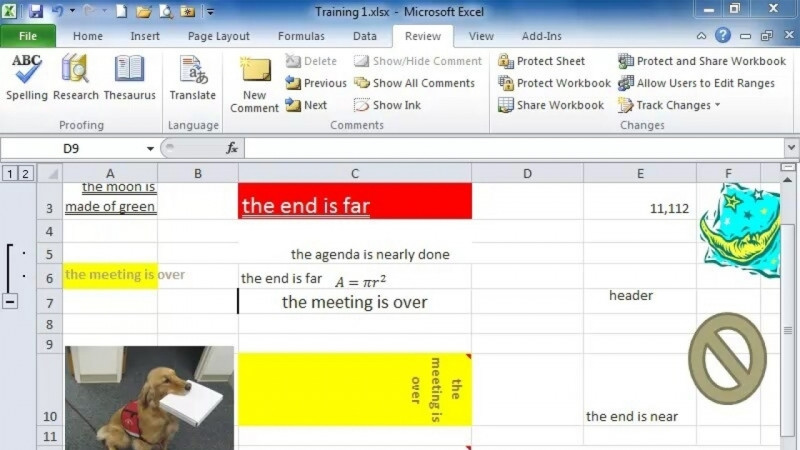
Excel uses unique cell references to store and use data. Tables, worksheets and workbooks are utilized to keep data organized. By properly using these tools to organize various levels of data, there are simple-to-navigate options for both storage and retrieval in data calculations. Ribbons and menus provide an easy method for finding the common functions you need.
This course covers the fundamentals of Microsoft 365 Excel, including understanding cell references, using worksheets to organize data, understanding ribbons and menus, and differentiating between worksheets and workbooks.
It is a beginner-level course for learners who want to understand the fundamentals of Excel and simplify the math functions required in their work.
The lessons cover Cell References, Worksheet References (Parts 1 and 2), and Ribbons and Menus (Parts 1 and 2).
You will build skills in Microsoft Excel, Spreadsheets, Excel Formulas, Excel Macros, Excel Services, and working with Tabular Data.
Excel provides multiple worksheets to help organize data and results into separate sections, and uses tables, worksheets, and workbooks to keep various levels of data organized for storage and retrieval.