Enjoying the preview?
This is the free first lesson. Get full access: request a demo or sign in.
Enjoying the preview?
This is the free first lesson. Get full access: request a demo or sign in.
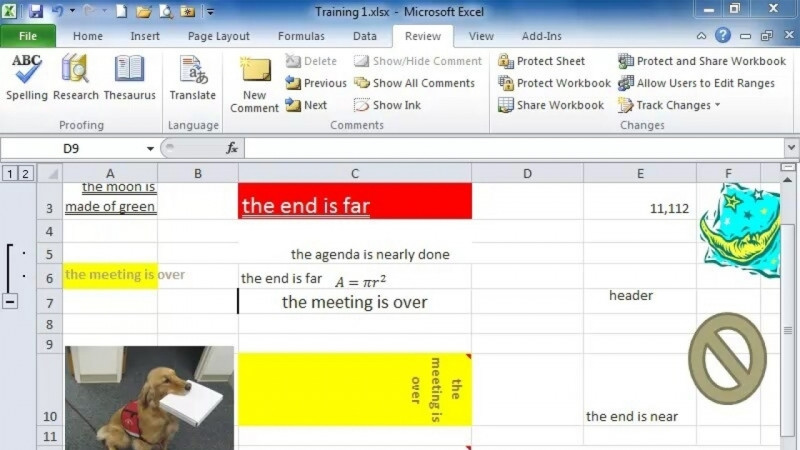
There are many ways one can make a mistake while using a computer. Excel is no exception to this human error factor. There are times when one may type a word with extra characters, leave out characters, or simply not remember how to spell a word. This is when the powerful tools of spell check come in to assist the user. By showing a list of possible words, one is able to correct most errors quickly and efficiently. Other options such as “ignore” for names and “replacing all” save time in editing.
Another factor may be that the user has simply used a word too many times and wishes to find alternatives or be more descriptive. This is when the thesaurus comes in handy. We explain in this module some of the user discretions that are required to properly use this tool. Further, we explore the limitations of these tools.
Finally, one of the most powerful tools in large files is search and replace. This can be used to locate as well as replace data, either individually or in bulk. By understanding these available tools, a user can better prepare for professional-level presentations.
The course covers Excel's proofing tools across three lessons: Spelling (spell check), Thesaurus, and Search and Replace, including the options within these tools and their limitations.
You will develop skills in Microsoft Excel, word processing, copy editing, error proofing, proofreading, and spell checking.
Spell check shows a list of possible words so users can correct most errors quickly and efficiently, with options such as 'ignore' for names and 'replace all' to save editing time.
The thesaurus is useful when a word has been used too many times and you wish to find alternatives or be more descriptive; the module explains the user discretion required to use it properly.
Search and Replace is one of the most powerful tools in large files, used to locate as well as replace data, either individually or in bulk.