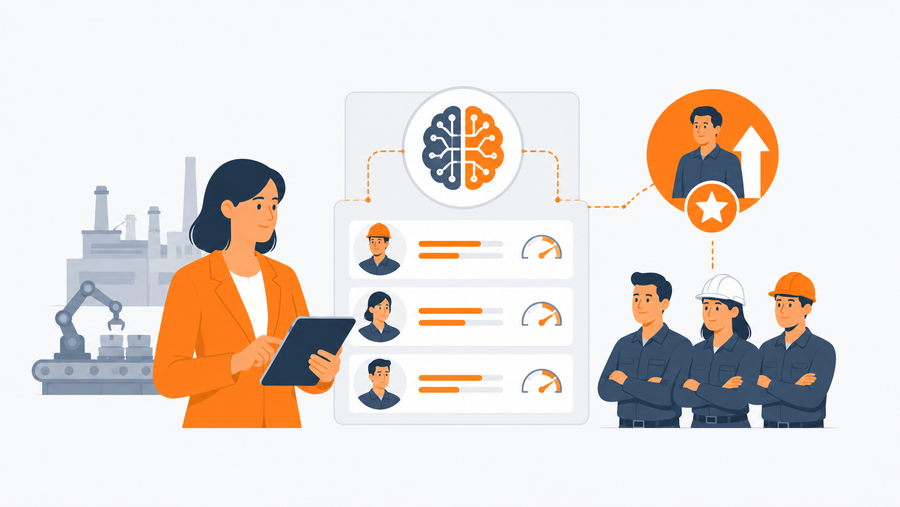
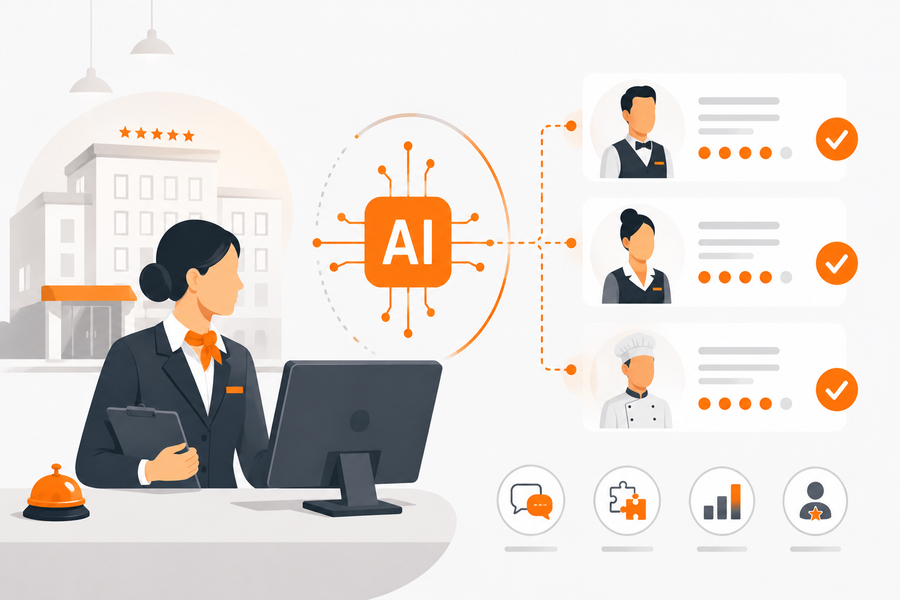
Every other week, a new AI model is released—faster, smarter, and more advanced than the last. For almost every workplace task, there’s now an AI tool promising greater efficiency. From generating reports to screening job candidates, AI is transforming how work gets done.
However, as businesses rush to integrate these tools, one question often gets overlooked: Are employees prepared to work with AI effectively, or are they becoming too dependent on it?
AI can automate tasks, but it can’t replace the judgment, creativity, and emotional intelligence that make businesses thrive. The real challenge isn’t AI itself—it’s ensuring that human skills remain at the center of decision-making, communication, and problem-solving.
In this blog, we’ll explore why human expertise is irreplaceable, the risks of over-reliance on AI, and how organizations can train employees to balance AI with human connection.
The Human Advantage: What AI Can’t Replace
AI can process vast amounts of data and automate repetitive tasks, but it can’t replicate the human skills that drive business success. Here’s why they remain indispensable:
- Soft Skills Build Stronger Teams and Relationships
AI can draft emails and process conversations, but it can’t build rapport, inspire teams, or navigate complex human emotions. Leadership, sales, customer service, and collaboration thrive on emotional intelligence—something no algorithm can replicate. - Context and Judgment Go Beyond Data
AI follows patterns; humans break them. When decisions demand strategic thinking, ethical reasoning, and adaptability, people—not machines—make the call. Whether it’s hiring the right talent or handling sensitive customer issues, human judgment is the safeguard against costly missteps. - Ethical Oversight Prevents Costly Mistakes
AI learns from existing data, which means it can inherit and amplify biases. Without human intervention, companies risk making flawed decisions that erode their credibility. People ensure AI serves business goals responsibly, not recklessly.
When businesses prioritize automation over human insight, they risk stripping away the core strengths that set them apart.
The Risks of Over-Reliance on AI
AI can streamline processes, but leaning on it too much can weaken the very foundation of a business—its people. Overdependence on AI doesn’t just create inefficiencies; it erodes critical thinking, authenticity, and trust. Here’s what’s at stake:
1. Loss of Critical Thinking Weakens Decision-Making
When employees rely on AI for every answer, they stop questioning, analyzing, and thinking independently. Over time, businesses risk creating a workforce that follows automation instead of driving innovation and strategy.
2. Impersonal Communication Undermines Engagement
AI-generated messages may be quick, but they lack warmth, empathy, and human intuition. When employees and customers feel like they’re interacting with machines rather than people, trust fades, and engagement suffers.
3. AI Bias and Misinformation Without Human Checks
AI has no sense of fairness—it relentlessly follows data patterns, even when they are flawed. Without human oversight, biased AI decisions can result in discriminatory hiring, impersonal customer interactions, and misleading business insights, damaging the brand’s recognition and trust.
AI is a tool, not a replacement for human insight. Businesses that forget this risk losing their most valuable asset—their workforce’s knowledge and creativity.
3 Critical Areas To Future-Proof Your Workforce For AI
The goal isn’t to resist AI but to train employees to use it wisely—leveraging AI’s strengths while strengthening the human skills that drive business success. Organizations can start by focusing on three key areas:
1. AI Literacy: Understanding Strengths, Limitations, and Risks
Employees need to know when to trust AI and when to challenge it. This means training teams to:
- Recognize AI bias and limitations
- Apply critical thinking to AI-generated insights
- Understand how AI decisions are made
2. Strengthening Human Skills That AI Can’t Replicate
Soft skills are the ultimate competitive advantage in the age of automation. Organizations should invest in training that enhances:
3. Strategic AI Integration for Smarter Workflows
AI should enhance human intelligence, not replace it. To achieve this, businesses should:
- Use AI to support—not dictate—decision-making
- Establish clear guidelines on when human judgment is required
- Ensure employees are trained to work alongside AI, not blindly follow it
- Leverage AI to boost productivity and streamline workflows
Help Your Team Master the Balance Between AI and Human Communication
AI is a powerful tool, but success in the modern workplace depends on employees who know how to use it effectively without losing the human touch.
That’s where our course, Strategies for Balancing AI and Human Communication, comes in. It equips teams with the skills they need to navigate this shift, ensuring they can:
- Use AI effectively in workplace communication while maintaining authenticity
- Develop critical thinking and ethical reasoning when working with AI-generated content
- Understand AI’s limitations and prevent bias and misinformation
- Enhance collaboration by using AI as a tool, not a replacement
At KnowledgeCity, we provide a complete learning solution to help your workforce grow and succeed. Our expert-led Learning Library offers thousands of premium training videos, while our intuitive LMS makes it easy to manage training and track progress—keeping your team engaged, skilled, and ready for the future.
Prepare your team today because the future of work isn’t just about technology. It’s about the people who know how to use it wisely.