
A production supervisor notices a new employee climbing a pallet rack to retrieve material from the top shelf. The employee completed fall protection training two weeks ago. The supervisor knows this violates protocol, but the order is behind, and the forklift is in use, so he does not intervene.
A few days later, OSHA visits the facility for a separate incident. During the walkthrough, the inspector asks the employee how they usually access materials at height. The employee describes climbing the rack. The inspector reviews the facility’s safety training online records and speaks with the supervisor. Although the employee completed the required course, the unsafe behavior continued, leading to citations for both the hazard and gaps in how training translated to actual work practices.
This scenario shows how safety training can appear complete on paper while falling short in real working conditions. OSHA inspectors do not simply verify that training occurred. They assess whether employees can recognize hazards and make safe decisions in their actual work environment. When trained employees continue to engage in unsafe behavior, the employer is considered out of compliance, regardless of how complete the records may appear.
Understanding what OSHA actually evaluates during inspections, and why documentation alone fails to meet those expectations, is essential for any manufacturing facility serious about avoiding citations.
In this blog, we will explore what inspectors look for beyond training records, the specific OSHA standards that apply to manufacturing, and what to look for in training approaches that support real-world compliance.
What OSHA Actually Looks for During Inspections
OSHA compliance officers do not arrive to validate training documentation. They observe work practices to determine whether employees can perform tasks safely under operating conditions.
What inspectors evaluate becomes clear once an inspection begins.
- Observation comes first: Inspectors walk through the facility, watching how employees interact with equipment, move materials, and respond to hazards. They are looking for unsafe behaviors that trained employees should know to avoid.
- Training records are reviewed alongside observations: If an employee is observed working unsafely, the inspector will check training documentation. However, the records only matter in context. A certificate showing that fall protection training was completed does not explain why that employee was just observed climbing a pallet rack.
- Employee interviews happen privately: Compliance officers often ask workers to describe procedures, explain hazards, and detail the training they received. Inconsistent answers across employees suggest that expectations were not clearly understood or reinforced.
- Timing and relevance are evaluated: Training must address current hazards and equipment. Generic safety training online completed three years ago does not satisfy requirements if the facility has since introduced new machinery or processes.
- Language and comprehension matter: Employees must genuinely understand the material. If workers do not speak English fluently, providing training in a language they cannot comprehend, even with certificates to prove completion, fails OSHA’s standard.
The standard OSHA applies throughout this process is competency, not completion. Some regulations, including Process Safety Management, explicitly require employers to verify that employees understand the training. The central question is always whether employees can perform their work safely today.
This is where most compliance efforts break down.
Why Safety Training for Employees Fails Under Real Manufacturing Conditions
Many facilities meet formal requirements. Compliance training is assigned, tracking systems log safety training online completions, and certificates are filed. But incidents still occur in situations where employees received training.
The problem isn’t that training didn’t happen. It’s that training explains procedures without preparing employees to apply them when conditions get difficult.
Consider a machine operator who completes lockout/tagout certification training. She can describe each step of the procedure accurately. Two months later, a jam occurs during the second shift. The line is down, and the supervisor has left for the day. The operator had cleared similar jams before. Going through a full lockout procedure would take significant time, and the shift is already behind schedule. She opens the guard without de-energizing the machine.
The certification training outlined the correct steps. But it didn’t address how to handle pressure, make decisions without supervision present, or manage competing production demands. It didn’t reinforce why the procedure exists in a way that helps employees make safe choices when shortcuts seem tempting.
OSHA observes this pattern constantly. Employees know the correct procedures but still take shortcuts during routine operations. Training covers what to do but fails to address the context in which decisions are actually made on the floor.
When incidents occur in these situations, OSHA often cites the compliance training program itself as inadequate. The program didn’t account for real-world decision-making conditions.
How Production Pressure Creates the Gap Between Training and Behavior
Manufacturing teams work under constant pressure to meet targets, reduce downtime, and control costs. This pressure creates situations where following procedures can slow production or delay shipments.
Employees face these tensions daily, such as:
- A forklift operator needs to move a pallet, but the certified spotter is on break.
- A maintenance worker encounters a minor electrical issue that could be fixed quickly without a full lockout if the equipment just stays off.
- A worker needs material from an elevated rack, but the proper access equipment is across the facility.
In each case, the employee completed compliance training. They know the correct procedure. But the immediate pressure points toward a shortcut that seems low-risk in the moment.
If supervisors tolerate these shortcuts to keep lines moving, employees learn that production speed matters more than the procedures covered in training. The message sent through daily operations overrides what was taught in the course.
OSHA inspectors recognize this dynamic. They often ask employees how they respond when procedures conflict with production demands or when proper equipment isn’t immediately available. If shortcuts are common practice, the training program will be cited as insufficient, even if every employee has a completion certificate.
This is the core challenge. Training that doesn’t account for production pressure and decision-making conditions will fail to produce safe behavior, no matter how thorough the content appears. To address this gap, let’s examine what OSHA actually requires and how effective training meets those standards.
OSHA Workplace Safety Training Standards for Manufacturing Facilities
Understanding which OSHA regulations apply to your facility determines what type of safety training is required and how specific it must be. Manufacturing environments are typically subject to multiple standards.
- Hazard communication is required wherever employees are exposed to hazardous chemicals. Workers must understand labels, pictograms, safety data sheets, and emergency response procedures. Training must occur before initial exposure and whenever new chemical hazards are introduced to the workplace.
- Lockout/Tagout applies to employees who service or maintain equipment where unexpected startup or energy release could cause injury. Online safety training must align with your written energy control program and address the specific equipment employees work with.
- Powered industrial trucks require operators to receive both vehicle-specific and workplace-specific training, followed by a performance evaluation. Refresher training is mandated at least every three years, or sooner if unsafe operation is observed.
- Personal protective equipment training is required before employees use any PPE and whenever new equipment is introduced. Workplace safety training must cover proper selection, use, limitations, maintenance, and replacement procedures.
- Machine guarding requirements mandate that employees working with machinery understand guarding systems and the hazards those guards control. Compliance training must explicitly prohibit the removal or bypassing of safeguards.
- Emergency action plans must be covered during new employee orientation and whenever the plan changes. Workers need to know evacuation routes, assembly points, and reporting procedures.
- Confined spaces regulations require facilities with permit-required confined spaces to train entrants, attendants, and supervisors on specific hazards, entry procedures, equipment use, and rescue protocols.
- Fall protection training is required for employees exposed to falls of four feet or more in the general industry. Safety training must address worksite-specific hazards and equipment inspection requirements.
- Respiratory protection programs require employees who wear respirators to complete medical evaluations, fit testing, and training on proper use, maintenance, and equipment limitations.
These standards define what training must cover, but they don’t guarantee employees will apply that knowledge when production pressures mount. That’s where team behavior and workplace culture become the real test of compliance.
How Team Behavior Shapes Safety on the Manufacturing Floor
Safety on the manufacturing floor depends on how teams work together in real situations. How employees communicate, follow procedures, and support one another under pressure determines whether safety practices are consistently applied.
Observe Team Interactions
You can identify compliance gaps by paying attention to everyday team behavior:
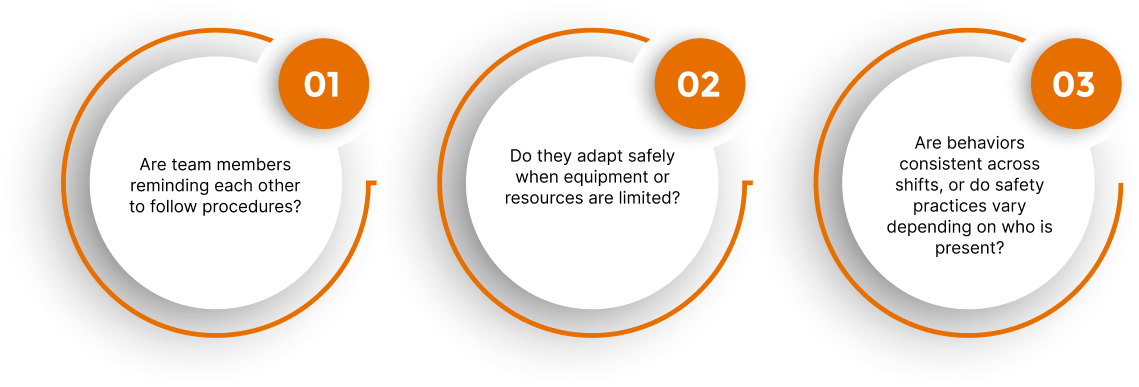
Conduct these observations regularly, at least once per week per high-risk area, and document your findings for review and follow-up.
Use Scenario-Based Team Questions
Small-group discussions help uncover how teams make decisions when faced with challenges:
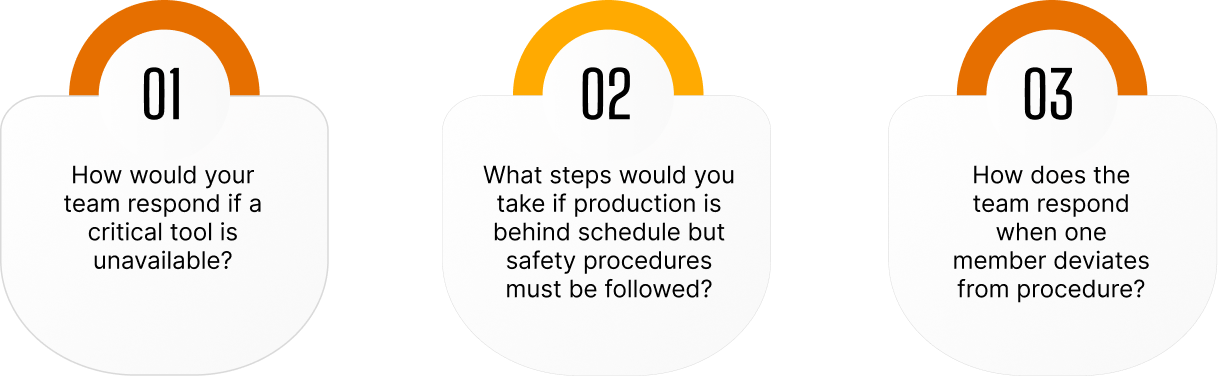
Track responses over time to measure whether teams are improving in consistency and understanding. Teams that answer reliably and demonstrate shared understanding indicate that training knowledge is being applied collectively.
Assess Supervisory Influence
Supervisors have a major impact on team behavior:
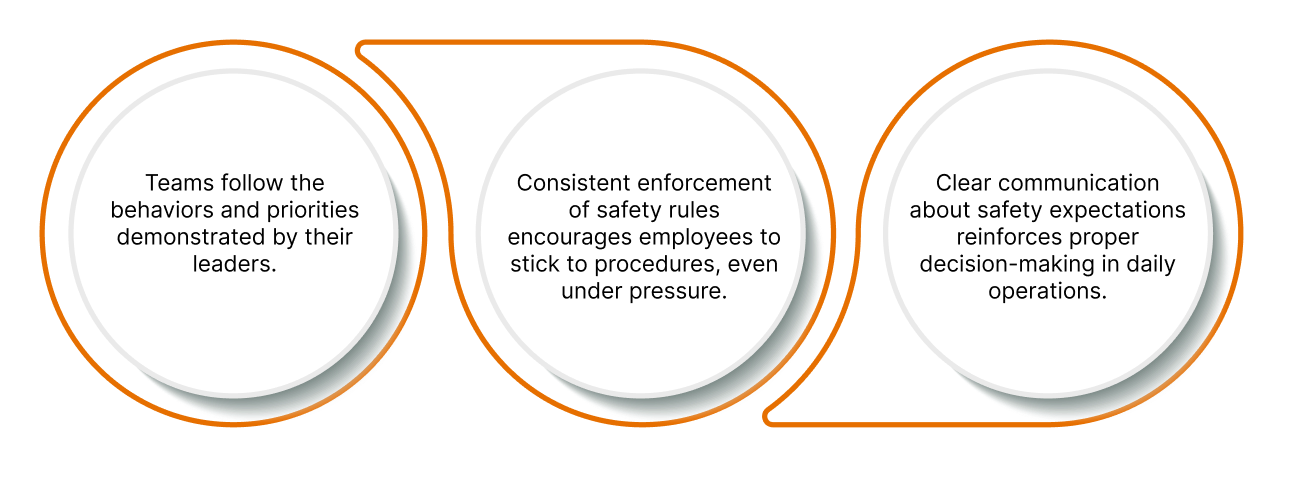
Include supervisors in observations and discussions to ensure they are modeling correct behavior and reinforcing safe practices.
Quick Team Behavior Check
You can implement this simple assessment immediately:
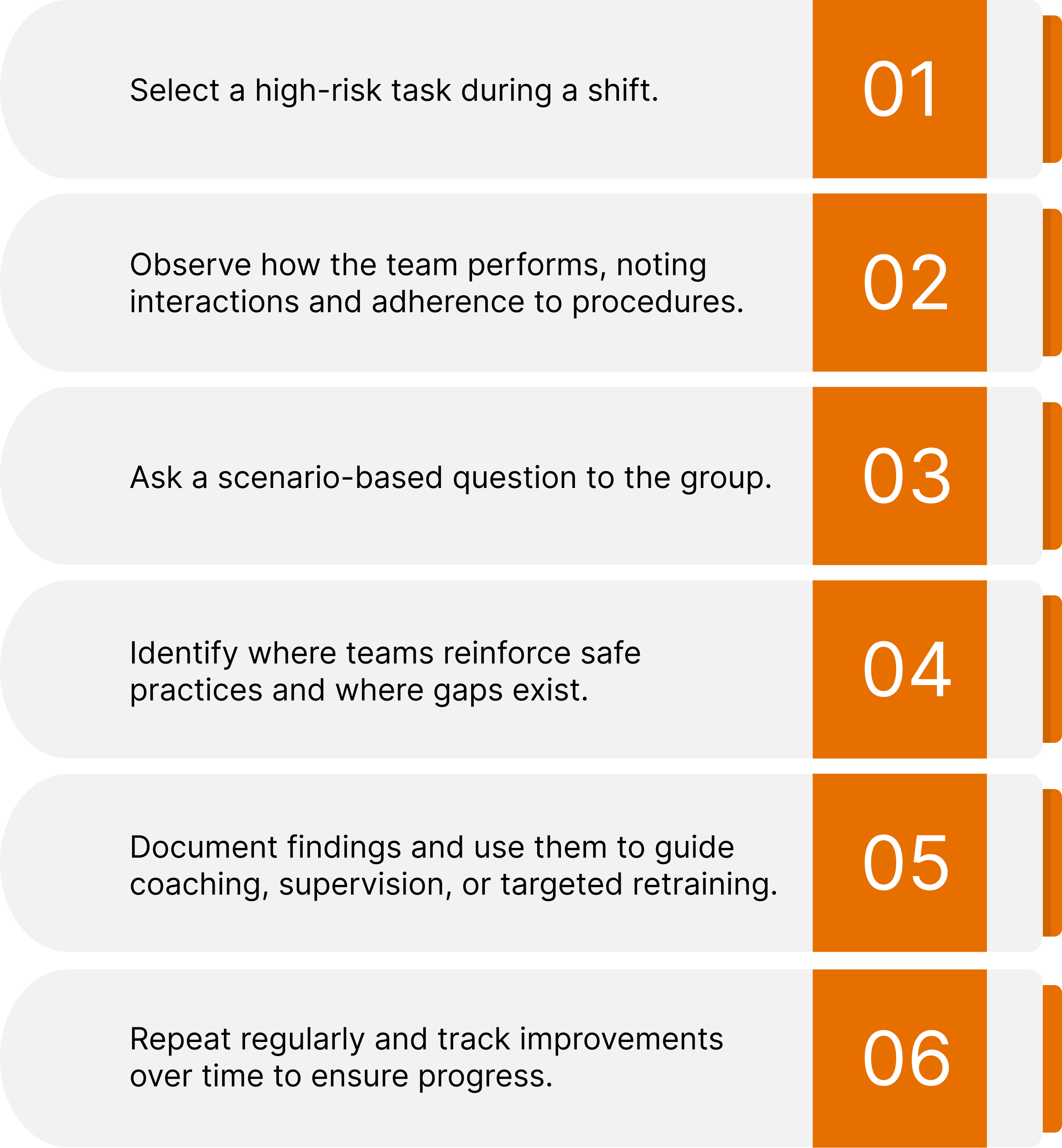
Using these practical steps helps ensure training translates into everyday safety and supports OSHA compliance efforts. But choosing the right safety training platform in the first place makes all the difference. Here’s what separates effective safety training from programs that only check boxes.
What to Look for in Safety Training Programs That Meet OSHA’s Competency Standard
Not all safety training online ensures employees can act mindfully and safely on the job. OSHA inspects what workers actually do, not what courses they have completed.
1. Manufacturing-specific certification training, not generic safety courses
Training courses online built for broad audiences often miss the hazards your employees actually face. Effective training addresses the specific equipment, processes, and conditions in manufacturing environments. Lockout/tagout training should cover the machinery your workers service. Fall protection should address the exact elevation risks in your facility. Generic content creates knowledge gaps that inspectors will identify.
2. Scenario-based learning that addresses decision points
The best workplace safety training presents situations employees will encounter on the floor: equipment malfunctions during high-volume shifts, missing supervisors during second shift, and pressure to skip steps when deadlines are tight. This approach prepares workers to make safe decisions under the conditions that actually cause incidents, not just in ideal circumstances.
3. Built-in competency verification, not just completion tracking
OSHA’s standard is competency, and some regulations explicitly require verification that employees understood the training. Courses that only track whether someone watched a video or clicked through slides don’t demonstrate understanding. Look for assessments, knowledge checks, and mechanisms for supervisors to verify that employees can apply what they learned.
4. Accessible formats and language options
Workplace safety training must be delivered in formats employees can genuinely understand. If your workforce includes non-English speakers, the program should provide training in their languages, not just translated documents. Accessibility features ensure all employees can comprehend the material, which is critical for both safety and compliance.
5. Regular content updates aligned with current OSHA standards
Regulations change, enforcement priorities shift, and industry best practices evolve. Compliance training content that hasn’t been updated in years may not reflect current requirements. Providers should regularly review and update courses to ensure ongoing alignment with OSHA standards.
6. Automated retraining and compliance tracking
Manufacturing facilities face constant changes in equipment, processes, and personnel. Safety training for employees should include systems that trigger retraining when required: after unsafe behavior is observed, when new equipment is introduced, and at regular intervals for specific certifications. Manual tracking of these requirements creates an administrative burden and increases the risk of lapses.
7. Clear documentation that demonstrates the training process
When OSHA reviews your training program, they’ll want to see what was taught, when it was delivered, who conducted it, and how comprehension was verified. Your training provider should generate documentation that clearly demonstrates these elements, not just completion dates.
8. Support for supervisor reinforcement
Compliance training doesn’t end when the course is complete. Supervisors need tools to identify knowledge gaps, provide coaching, and reinforce safety expectations during daily operations. Safety training that includes supervisor resources and reporting capabilities helps ensure training translates into actual floor behavior.
The right training platform should reduce your administrative burden while improving both safety outcomes and inspection readiness. This is where specialized platforms designed for manufacturing compliance make the difference. Here’s how KnowledgeCity’s approach addresses the specific workplace safety training failures we’ve identified.
How KnowledgeCity Supports OSHA Compliance for Manufacturing Teams
KnowledgeCity provides OSHA-aligned training for manufacturing facilities that goes beyond conventional compliance training requirements. Our workplace safety courses strengthen critical decision-making so employees respond correctly to hazards in working environments.
1. Scenario-Based Training That Reflects Production Pressure
Training presents realistic situations where employees must choose between shortcuts and proper procedures. These scenarios help employees think through critical safety decisions before facing them on the production floor.
2. Manufacturing-Specific OSHA Coverage
Courses address high-risk manufacturing areas, including lockout/tagout, fall protection, confined spaces, hazard communication, PPE, emergency procedures, and machine guarding. Content is regularly updated to align with current OSHA standards and industry practices.
3. Simplified Compliance Tracking and Retraining
The AI-powered LMS automates training assignments, tracks progress, and manages retraining notifications, keeping employees compliant as equipment, processes, and hazards evolve.
4. Visibility Into Knowledge Gaps
Built-in assessments and reporting allow supervisors to identify where understanding breaks down and reinforce training precisely where it is needed.
5. Accessible Training for Diverse Workforces
Training is delivered in multiple formats and seven languages, helping employees access and understand safety requirements regardless of role, background, or learning preference.
When the inspector asks your employees how they handle hazards, their answers will demonstrate genuine understanding grounded in real-world decision-making, not memorized procedures they don’t follow. That’s the difference between training that satisfies documentation requirements and training that prevents citations.

 KnowledgeCity











Subscribe to Our Newsletter
Join 80,000+ Fellow HR Professionals. Get expert recruiting and training tips straight
to your inbox, and become a better HR manager.