
As the year ends, you, as an HR or L&D professional, often find yourself surrounded by numbers, reports, and feedback from every corner of the organization. You have tracked who completed training, measured assessment scores, and gathered feedback on what worked and what didn’t. All this data reflects how employees learned and how well your programs supported growth, engagement, and compliance.
When approached thoughtfully, this information becomes more than a record of the past. It can guide you in planning meaningful learning experiences for the year ahead. By analyzing trends, identifying skill gaps, and connecting insights to business and compliance needs, you can create a learning plan that empowers employees, strengthens teams, and addresses both performance and risk.
This blog explains how to turn year-end training data into a practical, evidence-based learning strategy that is actionable, forward-looking, and deeply connected to the realities you face.
Start With the Right Data
Before you can make any decisions, you need to know you are working with the right information. HR and L&D professionals know that scattered data creates confusion, not clarity. The first step is to collect everything that matters and bring it together.
Important Sources Include:
- Learning Management System Records: Track who started, completed, and scored assessments.
- On-the-Job Learning Data: Gather information from coaching, projects, and experiential learning.
- Pre- and Post-Assessments: Identify where learners improved and where they struggled.
- Performance Reviews: Link training to observable changes in how employees perform.
- Employee Feedback: Understand perceptions, confidence, and the challenges learners faced.
- Business Metrics: Connect learning outcomes to sales, productivity, customer satisfaction, or error rates.
- HR Data: Consider tenure, promotions, role changes, and attrition for a full picture of development needs.
Bringing this information together creates a foundation for insights that are accurate and meaningful. Without it, any plan you create risks being disconnected from reality.
Clean and Validate Your Data for Accuracy
Having data is one thing; having data you can trust is another. Cleaning and validating your data is critical.
- Remove duplicates and standardize job and role titles.
- Normalize assessment scores so they are comparable across programs.
- Ensure dates and time zones are consistent.
- Confirm consent and restrict access where needed.
- Tag every course with a consistent skill taxonomy so you can track growth across roles and departments.
This step may feel tedious, but it ensures that the insights you uncover later reflect what is actually happening in your teams, not errors in the system.
Focus on Metrics That Clearly Reveal The Impact
It is easy to report on participation and completion, but those numbers alone do not tell the full story. You want to know how learning is affecting behavior, skills, and outcomes.
Metrics that matter include:
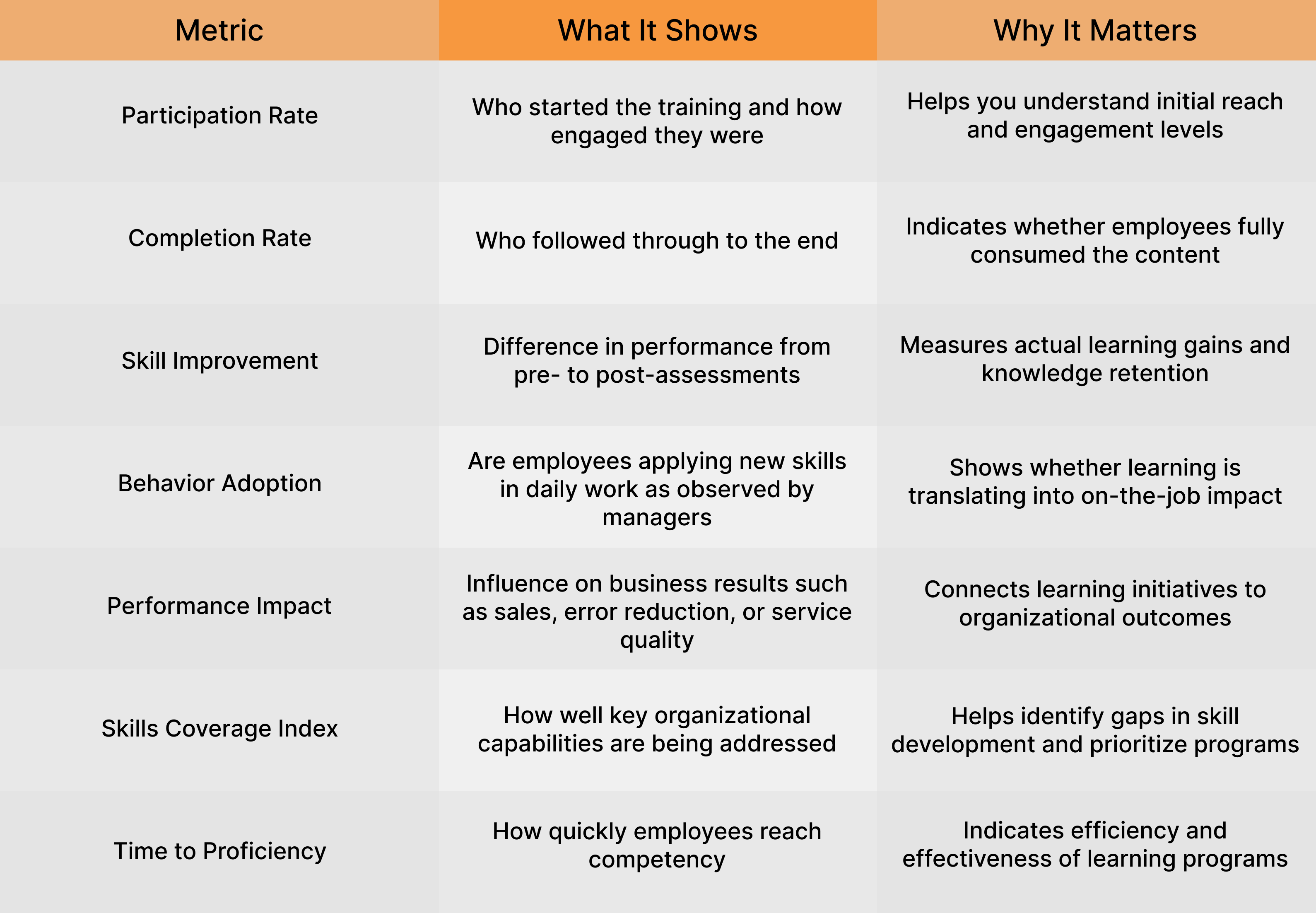
Tracking these metrics helps you understand not just whether employees completed training, but whether it made a difference.
Dig Deeper With Advanced Analysis
Numbers are powerful, but they become transformative when analyzed properly. Basic reporting gives a snapshot, but advanced methods uncover deeper insights that can guide your planning.
- Cohort Analysis: Compare how different teams or roles respond to learning to identify patterns.
- Pre/Post Assessments: Measure actual skill gains to understand what works and what needs adjustment.
- Difference-in-Differences Analysis: When only some teams received training, measure the impact by comparing before and after results with a control group.
- Propensity Score Matching: If the training rollout was not random, this method ensures fair comparisons by matching learners with similar peers.
- Predictive Skills Forecasting: Use historical trends to anticipate which skills will be critical next year and which interventions will have the greatest impact.
These approaches allow you to move from intuition to evidence-based planning.
Identify Skills Gaps That Matter
Understanding the gaps between current capabilities and what your organization needs is the heart of building next year’s plan. Start by mapping business priorities to required competencies. Then, use your data to see where employees are performing well and where they need support.
Validate your findings with managers to ensure the analysis aligns with what is happening day to day. A clear skills gap matrix provides a visual, prioritized view that makes decisions about learning investments straightforward.
Prioritize Learning Initiatives
Not every gap can or should be addressed immediately. Prioritize initiatives based on three key factors:
- Business Impact: Which skills will influence your strategic goals the most?
- Gap Size: How large is the difference between current skills and the target level?
- Feasibility: What is the cost, complexity, and time required to deliver the program?
Prioritization ensures that your efforts focus on programs that will produce meaningful results for employees and the business.
Design Learning Programs With Evidence in Mind
Once priorities are clear, design programs that match the need:
- Technical and Compliance Skills: For mandatory or regulatory programs, combine online modules with scenario-based exercises and knowledge checks. Ensure certifications are tracked automatically and align with regulatory timelines.
- Cognitive and Analytical Skills: Use case studies, simulations, and problem-solving exercises that reflect real workplace challenges. Monitor application through manager observations and post-program assignments.
- Behavioral and Leadership Skills: Focus on projects, coaching, and peer feedback to embed new behaviors. Include compliance considerations, such as ethical decision-making and adherence to internal policies.
Every program should include clear learning objectives, expected behaviors, and compliance checkpoints. This ensures that employees not only complete training but also act on it correctly and safely. By designing programs with both evidence and compliance in mind, you protect the organization while strengthening skills.
Need a practical checklist to review this year’s training before planning next year? Check out our step-by-step guide: End-of-Year Training Check: 8 Steps for HR and L&D Teams.
Implement Measurement Plans for Every Program
Planning measurement before deployment ensures accountability.
- Assign a primary business metric for each initiative.
- Identify leading indicators such as skill gain and early behavior adoption.
- Define the evaluation method and sample sizes.
- Set decision rules for scaling or adjusting programs based on evidence.
When measurement is embedded, every initiative contributes to organizational learning rather than simply being another training event.
Create Dashboards That Turn Data Into Decisions
A well-designed dashboard turns data into insight. Consider three perspectives:
- Executive View: Top skills gaps, coverage, and ROI of planned initiatives.
- Operational View: Funnel metrics, drop-off points, and course performance by cohort.
- Compliance View: Certification status, risk-scored cohorts, and mandatory completion rates.
Include confidence intervals and context to ensure your audience can trust the insights and act on them.
Test Programs First to Reduce Risk and Improve Impact
Pilots provide valuable evidence and reduce risk. Examples include:
- Manager-Led Coaching: Observe skill adoption and behavior change.
- Microlearning with Nudges: Compare performance against a control group.
- Targeted Compliance Programs: Measure reduction in incidents or errors after intensive training.
These pilots help build confidence in your plan and secure resources for full-scale rollout.
Build a Clear Roadmap for Next Year
Finally, convert insights into action. Establish a steering group, define roles for analytics and program design, and schedule reviews. Create a 90-day rollout plan that moves from data analysis to pilots and finally to full learning programs. Review quarterly and adjust based on results. This keeps your plan responsive and ensures learning initiatives remain relevant throughout the year.
From Year-End Data to Smarter Learning Decisions
Year-end training data holds the potential to do more than reflect the past. It can guide strategic decisions, improve employee skills, ensure compliance, and strengthen organizational performance. By gathering reliable data, analyzing trends, designing programs thoughtfully, embedding measurement, piloting initiatives, and creating a clear roadmap, HR and L&D leaders can transform insights into a learning plan that drives positive impact.
When approached strategically, the data you have collected becomes an insight for shaping the year ahead, building stronger teams, reducing compliance risk, and making learning truly matter.

 KnowledgeCity






Subscribe to Our Newsletter
Join 80,000+ Fellow HR Professionals. Get expert recruiting and training tips straight
to your inbox, and become a better HR manager.