Enjoying the preview?
This is the free first lesson. Get full access — request a demo or sign in.
Enjoying the preview?
This is the free first lesson. Get full access — request a demo or sign in.
The proper use of labels can make a big difference when it comes to safely handling hazardous materials. Labels are so important that multiple organizations have developed labels. This course will go over several of these systems to help ensure employees accurately label all hazardous materials.
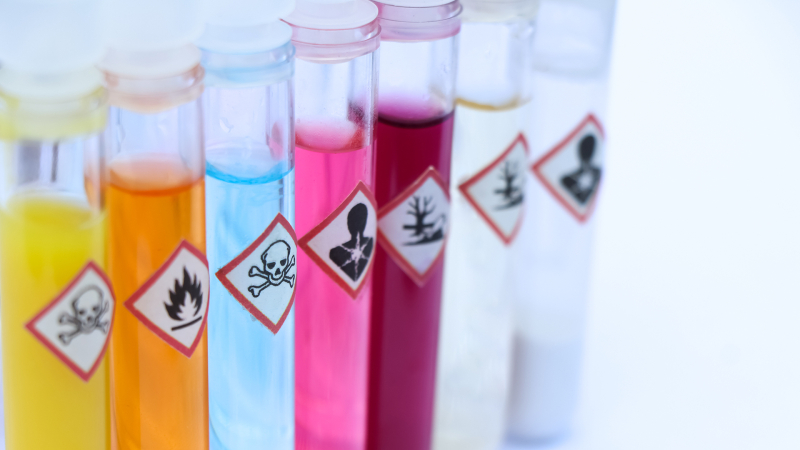
Hazardous materials labels are designed to provide information to anyone using or transporting the materials. The GHS system is a worldwide labeling system. Anyone, anywhere in the world can use this system and gain knowledge of the hazardous materials.
The United States has multiple specific labeling systems. The Department of Transportation sets labeling requirements for transportation containers. These help everyone quickly identify what is in a container.
The HMIS system is designed for the end users. These are labels that help employees know what the materials are and what to do if there is an emergency. They also inform employees of what personal protective equipment they need to use.
The NFPA system provides information about the material if it is involved in a fire. The Environmental Protection Agency has a labeling system for disposing of hazardous materials.
It is designed for employees who use or transport hazardous materials and need to accurately label them, including end users who must know what materials are and how to respond in an emergency.
The course covers several systems, including the GHS worldwide system, Department of Transportation (DOT) hazard class labels, the HMIS system, the NFPA system, and the Environmental Protection Agency's system for disposing of hazardous materials.
You will learn that HMIS labels help employees know what the materials are, what to do if there is an emergency, and what personal protective equipment they need to use.
The NFPA system provides information about the material if it is involved in a fire.
Lessons include an Introduction, Regulatory Labeling Requirements, GHS Labels, DOT Hazard Class Labels (Parts 1 and 2), HMIS Labels, The NFPA System, Hazardous Waste Labels, and a Conclusion.