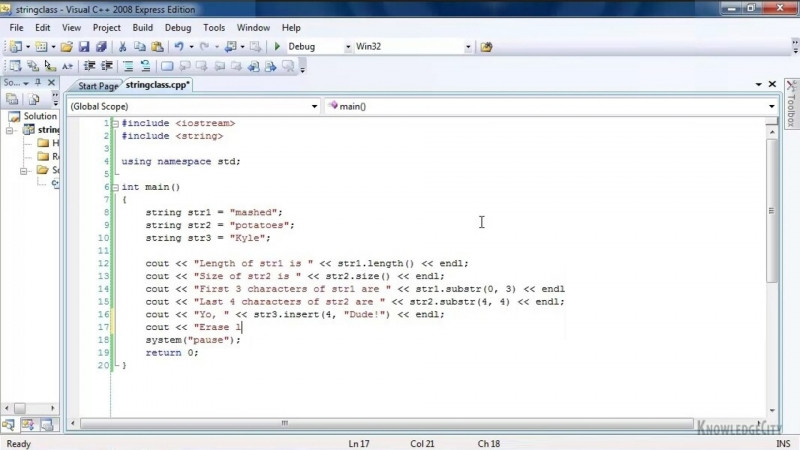
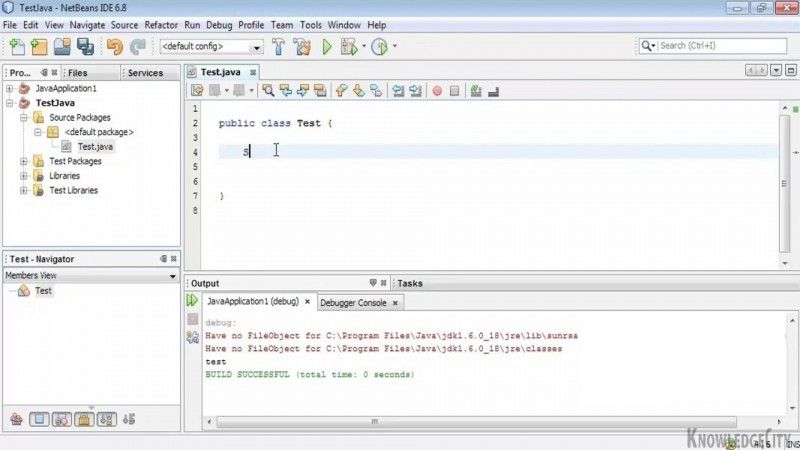
In this lesson, I will show you an overview of IDEs available for Kotlin. An Integrated Development Environment is software used for building applications. You will need one of these IDEs to create your Kotlin program. Now, you could write your code without an IDE. You could simply put all your code into notepad or even Google docs, but most developers use an IDE because it provides features that speed up the process. An IDE tool will, as the name implies, integrate many developer tools into one single environment or one single screen. The tools of an IDE are source editor code, which is a text editor that helps with syntax, auto completion, and checking for bugs and things. If, or I should say when, you misspell a Kotlin command, the IDE will correct it for you. It will also give you the option to autocomplete the syntax, which is nice. An IDE will also provide local build automation, which is a tool that automates repeatable tasks like compiling your code. You're gonna need to compile your code to turn your written code into a binary code. Then you're gonna have to package it, and then you're gonna have to run automated test. This is where an IDE beats a regular text editor, you must compile your code to translate it into binary code, which is called an executable. An IDE will do this for you, you must use this feature in order to run your programs, you can't get around it. And IDE will also provide a debugger, which is a program for testing. The debugger will help you to locate bugs in your code, and believe me, you will have bugs. An IDE can also help you to organize your code into logical groups. Let's take a look at some IDEs that are available for Kotlin. We have to start with IntelliJ IDEA. IntelliJ IDEA was developed by JetBrains. It was originally developed in Java, so of course it'll work for Kotlin since it's by the same company. Kotlin was developed by the JetBrains team, so there's an extra level of compatibility between Kotlin and IntelliJ by JetBrains. Kotlin even has IntelliJ tutorials, and IntelliJ offers version controls, which is nice. This is a look at the editor for the IDE. You put your code there, and the nice thing about these IDEs is that they all of them have what they call a smart code completion. As you type in the code, the IDE will suggest names of classes, and fields, and keywords. IntelliJ also has framework assistance and productivity boosters. But some other options for Kotlin is Kotlin Playground. Kotlin playground is great for beginners. It's a simple text editor, it's cloud-based, it's available in your browser, and it's compatible with every operating system. With Kotlin Playground there's no need for a download or an installation. The JVM allows developers to run the code as soon as you finish typing it. Kotlin Playground is lightweight, it's a great text editor, and allows you to write your code very fast and test it very fast. As an introduction to Kotlin, Kotlin Playground might be the best. It provides examples of pre-made code, and it has all the basic Kotlin functions. Best of all, Kotlin Playground is free, and it's made for beginners. Another option is Android Studio. Android Studio was specially made for mobile development with Android. If mobile development is your only goal, then Android Studio is your best tool. Android Studio has a full support for Kotlin, and it has support for all the standard components, and all the Android templates. Everything that you'll need for mobile app development is right here in Android Studio. And it has a great visual editor to help you as you're developing your mobile apps, because with mobile app development, visual is very important. Android Studio is great for Android development. Another option is Vim. The Vim IDE. Vim has been around for a long time, a lot of people know about it, it works. There's a lot of support for Vim. As you can see, it's very basic, it's no frills. But if you're looking for a stable environment, Vim is as solid as a rock. It also works with GitHub. You'll need the Kotlin plug-in, but that's pretty standard. Another one is Atom IDE. A-T-O-M IDE. For people who've used Atom before, Atom is a customizable IDE, it's very easy to use, a lot of people like it. But again, you have to add in the Kotlin plug-in. Another IDE available for Kotlin is Eclipse IDE. A lot of people have used Eclipse IDE. So, the Eclipse is a foundation. A lot of people are familiar with it, some aren't, but they rely on donations. Their IDE is free, a lot of people use it, it works great. You'll need the Kotlin plug-in, but if you're already familiar with Eclipse, it is available for you to use for Kotlin. Another choice you have is Sublime Text. Sublime Text has been around for a long time, a lot of people use it, it's a very sophisticated editor. It has a lot of great features for making code, for marking up your code, for keeping track of it. You will of course need the Kotlin plug-in, but Sublime Text is easy to use, it's very simple, and it provides a lot of great features. Here's a look at some of how the text editor works in these IDEs. You have your code here on the right, and on the left, you have all your folders and all your tools. The editor allows you to start typing in your code, and then it will help you to find the right syntax for that code. Sublime Text is great for that. All right, you've learned about the background of IDEs and what they do. Choosing your IDE it's a personal preference, but it might come down to the software development shop that you're working for. Many companies will choose one IDE for the whole team, and they'll call that the enterprise edition.