Key Takeaways
- Manufacturers are scoring candidates against the role’s competency profile before the offer letter, not after the operator has been on the line for 90 days.
- The Deloitte and Manufacturing Institute 2024 Talent Study projects US manufacturing could need up to 3.8 million new employees by 2033, with 1.9 million positions potentially going unfilled. BLS puts the current US manufacturing workforce at roughly 12.6 million.
- TestGorilla’s 2025 State of Skills-Based Hiring report finds 85% of employers now use skills-based hiring, up from 81% in 2024 and 73% in 2023. LinkedIn’s Future of Recruiting 2024 shows that focusing on skills expands a qualified talent pool by 10x.
- MSSC’s Certified Production Technician 4.0 covers five modules for entry-level frontline production. NIMS provides Smart and Classic credential frameworks for machining and Industry 4.0 job roles.
- Time-to-productivity tightens, early-tenure attrition drops, and first-shift quality variance narrows when operators are selected against the role they will actually run.
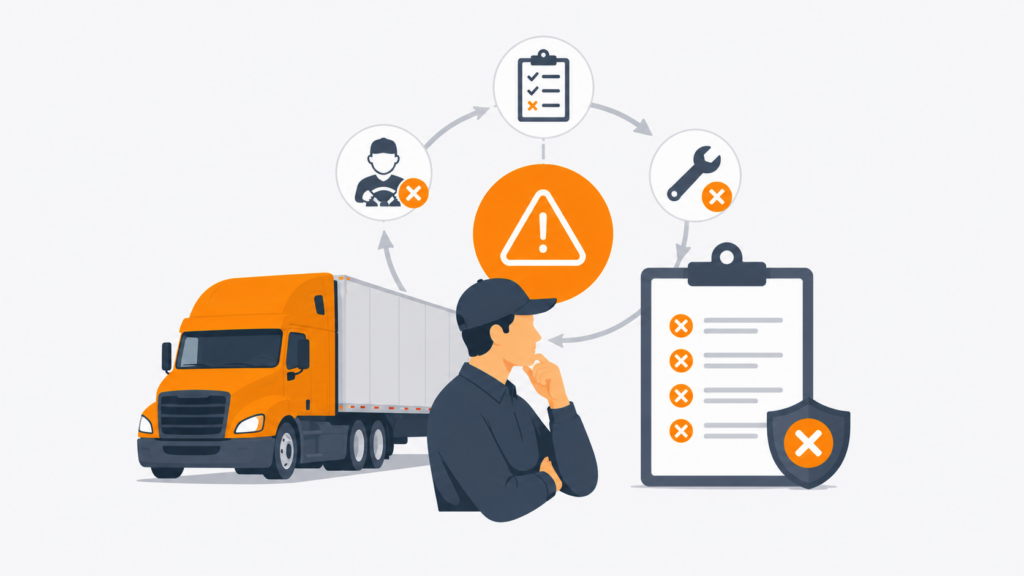
A manufacturer hires for a production operator role based on a resume and a 30-minute interview. Six months later, the operator is producing about 70% of the expected output. The plant manager asks training why. The honest answer is that nobody mapped the competencies the role required against the capability the hire brought. The mapping occurred after the hiring decision, once the gap had become a production problem rather than a screening one.
This article walks through why leading manufacturers are moving competency mapping into the hiring funnel, how the framework is built without paying a consulting firm, what pre-hire skill assessments look like in practice, and what changes occur in the first 90 days when operators are hired for the role they will actually run. Every statistic and framework citation traces to a primary source listed in the References section.
Why the Post-Hire Competency Gap Costs Manufacturers Every Cycle
The pattern is familiar inside most plants. The hiring decision is based on resume signals, prior employer, and a structured interview. The operator starts. For the first 30 to 60 days, training runs the new hire through standard orientation. Around day 60 to 90, the line supervisor flags output gaps that the orientation did not cover. A competency map is pulled from the L&D folder at that point. The hire is now in remedial training while underperforming in the role they were hired for.
What the Labor Backdrop Actually Says
The Deloitte and Manufacturing Institute 2024 Manufacturing Talent Study, released April 3, 2024, projects that US manufacturing could need up to 3.8 million new employees by 2033, with 1.9 million positions potentially going unfilled if the skills gap is not addressed. BLS Current Employment Statistics put the US manufacturing workforce at roughly 12.6 million as of mid-2026. In a workforce that size with that projected unmet demand, hiring based on resumes alone creates a post-hire training surcharge that compounds at scale. It also produces a growing gap between the qualifications employers screen for and the capability the roles actually require.
What Every Post-Hire Competency Gap Costs
SHRM’s 2025 Benchmarking Reports put the average cost per hire at $5,475 for nonexecutive roles. That cost is mostly sunk by the time the operator walks on the floor. When the competency gap surfaces 60 days later, the manufacturer is paying twice: once for the hire that already happened, and again for the remedial training the gap requires. A diagnostic that runs after the hiring decision can describe the gap. It cannot prevent it.
Why Skills-Based Hiring Has Crossed Mainstream
The broader hiring market has already moved. TestGorilla’s State of Skills-Based Hiring 2025 reports 85% of employers use skills-based hiring, up from 81% in 2024 and 73% in 2023. LinkedIn’s Future of Recruiting 2024 finds that focusing on skills expands a qualified talent pool by 10x compared with credential-based screening. The WEF Future of Jobs Report 2025 (published January 8, 2025) projects 59% of workers will need reskilling by 2030, and 39% of existing skill sets will be transformed over 2025-2030. Manufacturers that build the pre-hire framework now also build the reskilling infrastructure they will need at scale.
The same framework logic shows up when public-sector buyers evaluate competency management software, where the framework sits at the center of both hiring and development decisions.
What Changes When Competency Mapping Moves Before the Hiring Decision
The shift is a change in sequence. Instead of mapping competency after the hire and using the map to fix the gap, manufacturers map the role’s competency profile first and use the map to select the hire.
Three Things That Change Inside the Hiring Funnel
- The job description becomes a competency profile, not a credential checklist: “Three years’ experience” turns into “demonstrates Quality Practices and Measurement at the MSSC CPT 4.0 level, and 4 role-specific competencies the line supervisor validated.”
- The interview becomes a structured capability conversation: scenario-driven, tied to the competencies the operator will actually use.
- The skills assessment runs against the profile before the offer: not after the operator has been on the line for 60 days.
Why the 10x Talent Pool Expansion Only Converts to a Hiring Advantage With a Filter
The 10x expansion LinkedIn documents for skills-based hiring are a top-of-funnel gain. It only translates into a hiring advantage if the manufacturer has a reliable way to filter the broader pool. That filter is the pre-hire competency assessment, not the resume. Manufacturers that widen the pool without building the filter reverse the original problem: more candidates, same guesswork, longer time-to-hire.
Score Candidates Before the Offer
KC Map and KC Skills turn competency mapping into a pre-hire decision tool.
How to Build the Competency Framework Without Paying a Consulting Firm
A manufacturer does not need to build a competency framework from scratch. The infrastructure already exists in the public credentialing system. What the manufacturer adds is the role-specific layer and the line-supervisor validation that make the framework operational on its floor.
The MSSC CPT 4.0 Anchor for Entry-Level Production Roles
The Manufacturing Skill Standards Council’s Certified Production Technician 4.0 defines five modules for entry-level frontline production roles:
- Safety
- Quality Practices and Measurement
- Manufacturing Processes and Production
- Maintenance Awareness
- Green Production
Each module has measurable competencies that map to specific operator tasks. Manufacturers hiring for production operator roles can use CPT 4.0 as the public anchor for the core competency profile and the skills matrix that grows from it.
The NIMS Framework for Machining and Industry 4.0 Roles
The National Institute for Metalworking Skills publishes two credential frameworks. Smart Standards cover job roles aligned with Industry 4.0 (industrial automation, additive manufacturing, mechatronics, and related fields). Conventional credentials cover traditional machining skills, with a Machining Level I portfolio structured around drill press, grinding, milling, turning, and related standards. Manufacturers hiring for machining or Industry 4.0 roles use NIMS credentials as public anchors alongside CPT 4.0 and build a role-specific layer on top.
The Heroes MAKE America Pipeline
The Manufacturing Institute’s Heroes MAKE America program, which trains transitioning military service members, veterans, and military spouses for manufacturing careers, continued to expand in 2025. The Institute reports a 6% increase in cohort enrollments for the year, the launch of a new FAA Airframe and Powerplant certification pathway, and expanded training, including an Automation and Robotics course at Fort Stewart. Manufacturers building a competency framework can also use Heroes MAKE America as a pre-vetted candidate pipeline, in which the competency profile already aligns with the training the program delivers.
The Role-Specific Layer Only Line Supervisors Can Add
The role-specific layer is where line supervisors do the work. The supervisor who runs the line every day knows the core competency items the formal framework misses, the ones that separate a strong operator from an average one:
- “Knows when to call a quality hold without being asked.”
- “Reads the noise on the conveyor and adjusts feed rate.”
- “Spots a preventive maintenance signal before it becomes a downtime event.”
These show up in the supervisor-validation step. The final hiring profile combines the public framework and the supervisor-validated additions, captured as a skills matrix that the recruiting team and the plant floor share. HSE and operations leaders apply the same discipline when using AI-powered skills assessments to measure operator capability across lines.
What the Pre-Hire Skills Assessment Actually Measures
The framework alone does not change the hiring decision. The assessment that runs against the framework is what changes it. A defensible pre-hire skill assessment has three layers.
A Knowledge Check Against the Framework
The knowledge check evaluates whether the candidate can answer the technical content the role requires, anchored to the CPT 4.0 or NIMS competencies in the profile. This is where a skills gap analysis at the individual-candidate level replaces the guesswork of “did they list this on their resume.”
A Scenario-Based Judgment Section
The scenario section presents situations the operator will face on the line: a quality reading drifting toward the spec limit, a machine vibrating outside its normal range, a safety procedure conflicting with a production target. The candidate’s answer signals judgment, not just knowledge.
A Practical Task Where the Role Warrants It
When the role warrants it, the assessment asks the candidate to perform a simulated version of the work. A resume signal tells the hiring team what the candidate has been exposed to. The practical task tells the hiring team what the candidate can do today.
Where the Grow Suite Runs Inside the Hiring Funnel
The Grow pillar puts it directly: “Map every role. Find every gap. Chart the path forward.”
- KC Map holds the competency profile: standard competency frameworks (O*NET, SFIA) or your own, skills auto-mapped to training paths, and manager sign-off with proficiency levels.
- KC Skills runs AI-built skills assessments, provides gap-to-path mapping in real time, and offers reusable assessments for hiring and internal mobility. In the hiring context, KC Skills runs after the phone screen and before the final interview.
Candidates above the threshold proceed. Candidates below are not automatically rejected. They may be a better match for a different role at the plant, or a candidate for a structured development track in markets where the talent pool is thin. The assessment serves as both a screening and routing tool, and the same profile drives the training needs analysis for the current workforce. Manufacturers evaluating a broader talent assessment stack should treat KC Skills as the skills-side layer, with KC Talent in the Thrive suite complementing it for job-fit scoring.
What Changes in the First 90 Days When Operators Are Hired Against the Role
The point of moving competency mapping into the hiring funnel is to identify what changes in the first 90 days when an operator is hired for the role they will actually run.
Time-to-Productivity Tightens
Because the candidate has been screened against the competency profile, the Day 1 training plan focuses on the specific gaps the assessment surfaced, not on a generic curriculum the manufacturer hopes will land. The operator reaches independent output faster because the training is precision-targeted.
Early-Tenure Attrition Drops
The candidate has a clearer picture of what the role requires before signing. The role-expectation gap that drives a portion of 60- and 90-day quits narrows. The manufacturer is hiring people who chose the role with a better understanding of what it entails.
First-Shift Quality Variance Narrows
Operators selected against a role’s quality competencies arrive with more consistent first-shift output than operators selected on resume alone. The framework does not substitute for line training. What changes is the starting distribution: the bottom moves up because candidates at the bottom were screened out of the role, not into it.
The Longer Arc: From Hiring Filter to Strategic Workforce Planning
The pattern has a longer arc. The WEF Future of Jobs Report 2025 projects that 59% of the global workforce will need reskilling by 2030, and 39% of existing skill sets will be transformed by then. A manufacturer that has built a pre-hire competency framework has also built the operational infrastructure for that reskilling wave. The same profile that screens new hires identifies who on the current floor needs which training next. That is strategic workforce planning, not a recruiting tactic. The buyer pattern parallels a multi-site workforce development platform decision in construction and connects directly to performance reviews and OSHA qualifications across multi-plant manufacturers.
Stop Hiring Against the Resume. Start Hiring Against the Role
See how KC Map and KC Skills move competency mapping out of the L&D folder and into the hiring funnel, where it changes the decision instead of describing the gap.
Frequently Asked Questions
1. What is competency-led hiring in manufacturing?
Competency-led hiring scores candidates against the core competency profile a manufacturing role requires before the offer goes out, rather than treating the competency map as a post-hire training diagnostic. The profile is built from a public anchor such as MSSC’s Certified Production Technician 4.0, extended with role-specific items that the line supervisor validates. Candidates are screened against the profile using skill assessments, a structured interview, and, where appropriate, a practical task.
2. How is the framework built without paying a consulting firm?
The public credentialing infrastructure provides the anchor. MSSC CPT 4.0 covers Safety, Quality Practices and Measurement, Manufacturing Processes and Production, Maintenance Awareness, and Green Production for entry-level production roles. NIMS provides Smart Standards for Industry 4.0 job roles and Conventional credentials for traditional machining. The Manufacturing Institute’s Heroes MAKE America program documents apprenticeship pathways for military talent. Manufacturers adapt these public frameworks to their roles, validate the results with line supervisors, and then capture the output as a skills matrix.
3. Does skills-based hiring actually expand the qualified talent pool?
Yes, by a measurable margin. LinkedIn’s Future of Recruiting 2024 finds that focusing on skills expands a qualified talent pool by 10x compared with credential-based screening. TestGorilla’s 2025 report shows 85% of employers now use skills-based hiring, up from 73% in 2023. The expansion only translates into a hiring advantage if the manufacturer has a reliable way to filter the broader pool, which is what the pre-hire competency assessment and skills gap analysis are for.
4. What does the Grow Suite cover for manufacturers?
KC Map is a competency builder that lets manufacturers work from Standard competency frameworks (O*NET, SFIA) or their own, with skills auto-mapped to training paths and manager sign-off with proficiency levels. KC Skills offers AI-built skills assessments, real-time gap-to-path mapping, and reusability for hiring and internal mobility. Together, they move competency mapping out of the L&D folder and into the hiring funnel.
5. How does the pre-hire framework support long-term workforce planning?
The WEF Future of Jobs Report 2025 projects that 59% of workers will need reskilling by 2030, and 39% of skill sets will be transformed between 2025 and 2030. A manufacturer that has built a pre-hire competency framework has also built the operational base for that reskilling wave. The same profile that screens new hires identifies who on the current floor needs which training next, which makes the framework a strategic workforce-planning asset rather than a recruiting tactic.
References
- Deloitte and The Manufacturing Institute. 2024 Manufacturing Talent Study: US Manufacturing Could Need as Many as 3.8 Million New Employees by 2033. Released April 3, 2024.
- US Bureau of Labor Statistics. Industries at a Glance: Manufacturing (NAICS 31-33), Current Employment Statistics, latest monthly data 2026.
- TestGorilla. The State of Skills-Based Hiring 2025.
- LinkedIn Talent Solutions. Future of Recruiting 2024 Report.
- World Economic Forum. Future of Jobs Report 2025. Published January 8, 2025.
- SHRM. 2025 Benchmarking Reports (cost-per-hire $5,475 nonexecutive).
- Manufacturing Skill Standards Council. Certified Production Technician (CPT) 4.0 (five modules: Safety, Quality Practices and Measurement, Manufacturing Processes and Production, Maintenance Awareness, Green Production).
- National Institute for Metalworking Skills. NIMS Credentials: Smart Standards (Industry 4.0 job roles) and Conventional credentials (traditional machining).
- The Manufacturing Institute. Heroes MAKE America 2025 in Review (6% increase in cohort enrollments; FAA Airframe and Powerplant certification pathway; Automation and Robotics course at Fort Stewart).